
Role, Characteristics, List and Tomb of Archdeacons (Arkadiyakons) of Saint Thomas Christians

Archdeacon or Arkadiyakon in Malayalam was “the prince and head of the Christians of Saint Thomas” and had such titles as “Archdeacon and Gate of All India, Governor of India.” Under the Metropolitan of Saint Thomas Christianity send by the Patriarch of Seleucia- Ctesiphon , there existed from ancient times the office of the Archdeacon (Arkadiyakon). The temporal administrations of the church of St.Thomas Christians were conducted by Archdeacons (Arkadiyakons) who were very influential in the society.
With the arrival of Portuguese in Kerala, the Church in India in the Sixteenth century began to undergo many changes of different type. After the Syond of Diamper, under the Latin prelates from the beginning of the Seventeenth century, the competence and the office of the Indian Archdeaconate ( office of Arkadiyakon) gradually diminished. Finally after a century, after a series of deception the office itself was left unprovided.
These changes were not a natural progress in the Indian Church. On the contrary it was a coerced change executed under the missionaries. It was an aberration- a deviation from the genuie structure of Church of Thomas Christians. Those who are thinking of restoring the genuine form of Church of Saint Thomas Christians, could also restore the glorious institute of Archdeaconate, adapting it of course to the exigencies of our time.
Among the Catholic Syrians, the last Archdeacon was Mathew who was the nephew of the first indigenous Bishop Mar Chandy Parampil of Kuravilangad. He was nominated in 1678 (1694) under the Portuguese Padroado. He died on 1706 and since then the office was left un provided.
Among the Malankara Syriac Orthodox, after the Coonan Cross Oath, Archdeacon Thomas became the Bishop as Mar Thoma I in 1653. Thus the role was changed from Archdeacon to Bishop . His line continued in the Malankara Syriac Orthodox until it was replaced by Mar Dionysios II in 1815 .
From the available records, Archdeacon was a hereditary position from the Parambil family of Kuravilangad. Some say it was from Shankarapuri and Pakalomattam families earlier. In this way the See of Archdeacons existed at Kuravilangadu.
This article briefly outlines the 1) Role of Archdeacons, 2) Distinct Characteristics of Nasrani Archdeacon, 3) List of known Archdeacons 4) Tomb of Archdeacons at the Archdeacon Nagar Kuravilangadu 5) Efforts to restore Archdeaconate of India and 6) Summary.
1. Role of Archdeacons (Arkadiyakon) in Saint Thomas Christian Community
Archdeacon was “the prince and head of the Christians of Saint Thomas” and had such titles as “Archdeacon (Arkadiyakon) and Gate of All India, Governor of India.”
According to the traditional structure, the Indian diocese of the Church of the East was governed by a Metropolitan sent by the Patriarch of Seleucia-Ctesiphon. At the same time, on the local level, the affairs of the India Church were governed by the Malabar yogam, that is the Assembly. There was also an indigenous head of the Church of Malabar, called “Archdeacon (Arkadiyakon) of All India.” which, according to historians, means “the head of the caste,” that is, the head of the St Thomas Christians, but also the “Archdeacon of All India.” One local palm leaf document also call this position in Malayalam as “Jatikku Karthavian“.
This was a peculiar characteristic of the St Thomas Christian community, which was combined with an existing function of the Church of the East or Chaldean Church with broader powers.
2. Distinct Characteristics of Nasrani Archdeacon (Arkadiyakon)
2.1 Origin and Evolution
There are no authentic documents available about the origin of the office of Archdeacon (Arkadiyakons). Many people has tried their own interpretations with some existing polemic literature. The reference of Patriarch Timothy as “Arken” in eight century refers to Archdeacon or Arkadiyakon. There are also some fragmentary evidences which suggests existance of Indian Bishops in the early Church of Saint Thomas Christians. The Bishops in Indian Church some time after ninth century were Chaldeans or Persians in origin. It is not known if the evolution of the office of Arkadiyakons are linked with early Indian Bishops for want of further evidences.
2.2 Archdeacon VS Arkadiyakon
In Malayalam language locally this position is still known as Arkadiyakon. The pre- Portuguese tomb of Arkadiyakon’s at Kuravilanagadu is known in the name of Arkadiyakons. Most of scholars who have studied about the office of Arkadiyakon has compared it with an existing office of other churches in different liturgical traditions called Archdeacon. They have also concluded that this is a distinct position in comparison to any other church. It is not known, if this was a distinct position from the beginning of evolution of the office of Arkadiyakon. Such a hypothesis holds value based on the fact that Patriarch of Seleucia- Ctesiphon Thimothy in eight centurycalls “Arken” the head of faithful in India .
2.3 Secular leader
The Archdeacon had all the attributes of a secular leader and was normally escorted by a number, sometimes several thousands, of soldiers.
2.4 Several bishops, One Archdeacon
It is important to note that while there could be several bishops appointed for the Malabar Diocese, there was always only one Archdeacon. This was a custom contrary to the canons of the Chaldean Church.
2.5 Socio-political, Princely role
In East Syriac Church, the Archdeacon was an ecclesiastical function, but from that of the St Thomas Christian community it was also a socio-political, princely function, representing the unity of the Christian nation, or caste of Hindu India.
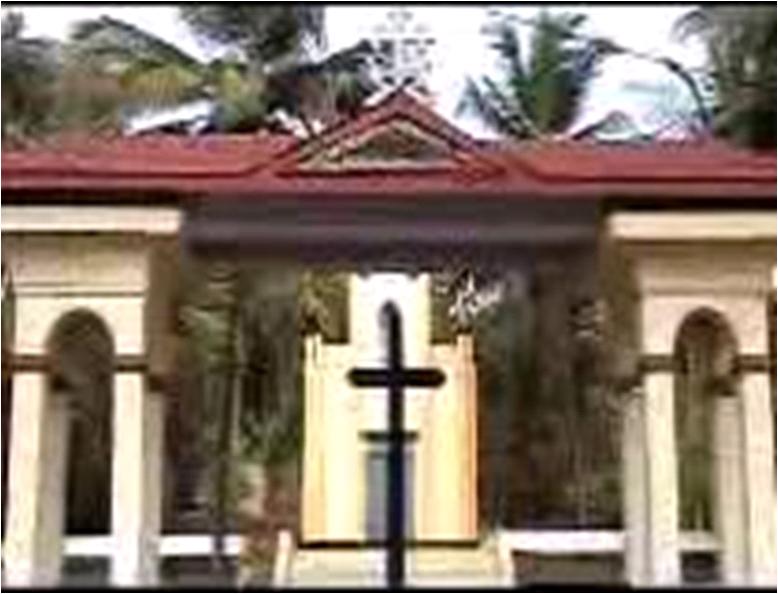
The Kings and Princes used to consider him as the chief of Christians. The kings of Cochin used to give royal insignias to the newly elected Archdeacons. Armed Bodyguards used to escort the Archdeacons on their journeys. On behalf of the Christians he used to parley with the rulers and negotiated with local chieftains.
2.6 Role of Bishops & Archdeacons
These bishops who come from Chaldea used to ordain priests, gave sacraments, bless churches, bless “syth” and performed other functions. The metropolitans used to be known as the head of See of Saint Thomas, exercising supremacy over Indian Church. The Metropolitans used to exercise their control over the Church through the Archdeacons. In practical and day-to-day functioning of the Church Archdeacon exercised superintendence.
The Archdeacons were the right arm of the Metropolitan Bishop, and in their absence or vacancy held spiritual control of the Church also. They also exercised many special powers. Selection of Seminarians, appointing and transferring of priests, exercising temporal powers over the church properties, collecting the levies from the faithful etc fell within the domain of the powers of Archdeacon. Some reports suggest that the Archdeacons in certain situations also had episcopical role as well. An example being the Archdeacon Jacob appointed by Mar Simon.
2.7 Archdeacon in East Syriac Church and Saint Thomas Christians
According to the canons of the East Syriac Church, the Archdeacon is the highest priestly rank. Archdeacon is the head of all the clerics belonging to a bishopric who is responsible for the whole worship of the cathedral church and represents the will of the bishop in his absence.
The rank of the Archdeacon in India was much more important than this. The Indian Archdeacon fulfilled the role of an Ethnarch. He was “the prince and head of the Christians of Saint Thomas” and had such titles as “Archdeacon and Gate of All India, Governor of India.” The origin and the meaning of the term “Gate” is mysterious. One might suppose that it is a Christological title: “I am the Gate of the sheep” (Jn 10:7).
2.8 Distinct position in comparison to any other Church
Archdeacon of Kerala Church was not an equal position to the Arch-deacons of any other Church. The position of Archdeacon exists in Latin, Byzantine, Areminian, Alexandrain, Antiochean and Chaldean rites. The Archdeacon of Saint Thomas Christians was a much larger entity with wider powers and exalted position. He was called prince of believers, Lord of the Christians, and Archdeacon of the whole of India.
2.9 Hereditary Succession
The Archdeacon in the Church of the East or Chaldean Church was elected by the bishop according to merit. The office of the Archdeacon of India seems to have been hereditary. It was the privilege of the Pakalomattam family, at least from the sixteenth century onwards. History has left us the details of a number of Pakalomattam Archdeacons, beginning with 1502, when Metropolitan John of India appointed George Pakalomattam.
The name of the family varies, and the family seems to be identical with the Parambil family of Kuravilangad, translated into Portuguese as De Campo. The patriarchal succession seem to have happened for Archdeacons until the 18th Century. Malankara Syriac Orthodox Metropolitans of Pakalomattam family also had patriarchal succession from 17th till 18th century. The word nephew used in the text shall not be misunderstood as sister’s son, it means only successor. The Syrian Christians followed Patrillineal succession of Brahmins. Hence word usually means brother’s son.
3. List of known Archdeacons (Arkadiyakon) of Saint Thomas Christians
There are only very little information about Saint Thomas Christians before the arrival of Portuguese in India. The Chaldeans held the Church of India as a province under their Patriarch who used to send Metropolitans to govern it. The names and succession list of most of the Archdeacons prior to the Portuguese period is not known to us. After the arrival of the Portuguese, their records has mentioned about Archdeacons. The following list of Archdeacons are compiled using the ” The Archdeacon of All India” by Dr. Jacob Kollaparambil.
| Archdeacon ( Arkadiyakon) Name- Appointed by | Year |
| Patriarch Thimothy calls Archdeacon ( Arken), head of faithful of India | c.780-826 |
| Metropolitan Mar John appoints George Pakalomattam ( Ittikuriath) as Archdeacon | 1502 |
| Followed by Archdeacons Jacob and Alexander according to tradition | Dates unknown |
| Archdeacon George of Christ ( Mentioned in 1552 documents onwards) | c.1552-1585 |
| Archdeacon John ( exact dates not known) | c.1585-1591 |
| Archdeacon Jacob appointed by Mar Simon ( exact dates not known) | c. 1584-1596 |
| Archdeacon George of the Cross appointed by Archbishop Mar Abraham | 1593-1640 |
| Archdeacon Thomas appointed by Archbishop Brito. In 1653 Archdeacon Thomas was consecrated as Bishop Mar Thoma I, thus the role was changed and his line continued till Mar Thoma VIII in 1815 among the Malankara Syriac Orthodox. | 1640-1653 |
| Archdeacon Kunju Mathai appointed by Archbishop Gracia SJ | 1656- unknown |
| Archdeacon Mathew appointed by Mar Chandy Parambil for the Catholics | 1678-1706 |
3.1 Unknown Archdeacon during Patriarch Thimothy
The earliest historical documents that shows the existence of Archdeacons is around the year 800. The Patriarch Thimothy (780-826) wrote to the Archdeacon ( Arken), the Head of the Faithfull in India, about the right norms to be followed in the ordination of the priests, bishops, metropolitans and Patriarch. He wrote that only superiors could ordain the inferiors and therefore no Bishop could ordain a metropolitan neither a metropolitan another Metropolitan. Up to the time of Mar Timothy, the bishops of China and India used to ordain their Metropolitans laying the letter of the Patriarch over the elected as if the very hand that wrote that letter were laid upon the ordained. (( IBN AT- TAIYIB- II-p.121 ))
3.2 Archdeacons- George, Jacob, Alexander
According to a tradition mentioned by George Kurien in his dissertation on Syrian Church of India, Metropolitan Mar John appointed George Pakalomattam in 1502 as Archdeacon. He was followed by Jacob, Alexander and George ( this George may be Archdeacon George of Christ or his uncle Professor George who are mentioned in few documents). (( The Syrian Church of Malankara, George Kurien, Kottayam 1908 ))
A padiyola document written in palm leaves which is now in the possession of Pothanikat family at Kothamangalam mentions an Archdeacon in the early years of Sixteenth Century. The document says that in the year 1509, Archdeacon Ittikuriath effected a compromise between two parties contending for the ownerships of two Churches at Kothamangalam. Archdeacon Ittikuriath seems to be the George Pakalomattam mentioned earlier.
3.3 Archdeacon George of Christ
After the death of the Chaldean Bishop Mar Jacob in 1552, Professor George, uncle of Archdeacon George of Christ, sent a message to the Chaldean Patriarch requesting bishops for the Saint Thomas Christians. (( ARSI- GOA –MAL- Vol 12, SRD Vol XII, p.398 ))
There are many references about this Archdeacon in Portuguese records of Fr. Amador Correi SJ, Fr. Francis Dionysio etc.
The reports of Jesuits give much information about the extent of power and authority exercised by Archdeacon George among the Christians of Saint Thomas. These reports praise him for his great authority, learning, zeal, virtues etc.
In 1583, the Archbishop Mar Abraham and the Archdeacon convoked synods in two places. With in the period of five years ( 1576 to 1581) , Pope Gregory XIII addressed FIVE Apostolic Briefs to Archdeacon George. All of them were to praise him and to grant him new privileges and honors.
Even though there is some uncertainty concerning the appointment of Archdeacon George of Christ as the first indigenous bishop there are many books written clarifying and discussing this in detail.
In March 5, 1580, the Pope confirms the election of Archdeacon George as Bishop, suffragon to Mar Abraham. In 1566 Patriarch Abdisho authorized Mar Abraham to ordain him (George of Christ) as bishop and suffragan (successor) to Mar Abraham. Both Mar Abraham and the Jesuit fathers had written to Rome about it. Pope Gregory XIII confirmed this nomination by his brief “Accepimus quod”, issued on 4 March 1580.(G.Beltrami, La Chiesa Caldeo, pp. 196–7). But the archdeacon who, out of humility, had previously declined this honor was not consecrated even after the papal confirmation.This was a real pity. Our tradition is also that St Thomas ordained two Bishops one for Mylapoor and other for Malabar. If an indigenous line of bishops had again started in 1566, the St. Thomas Christian community would have been spared many unnecessary troubles and unfortunate divisions.
Some Malabar accounts mentions his death around 1585 AD.
3.4 Archdeacon John
A report about the Church of Voipicotta, a “ Lona Cassanar Arcediago” is mentioned among those who met the expense, when the Church was re built under Fr. George Crasto SJ. A report of Archbishop Roz SJ in 1622 also states that one brother of Archdeacon George of Christ also held the office of Archdeacon. Other reports indicate that Archdeacon George of Christ had a brother named John. Lona is a Malayalam version for “Lohannan ( John). It has been suggested that he held the office until 1591.
3.5 Archdeacon Jacob
Mar Simeon appointed Archdeacon Jacob in 1584 when he left for Rome in the company of two Francisacan Friars. Archdeacon Jacob maintained his authority against the prevailing trend of the latinising policy under Mar Abhraham. He did not accept the Gregorian Calendar.
3.5 Archdeacon George of the Cross
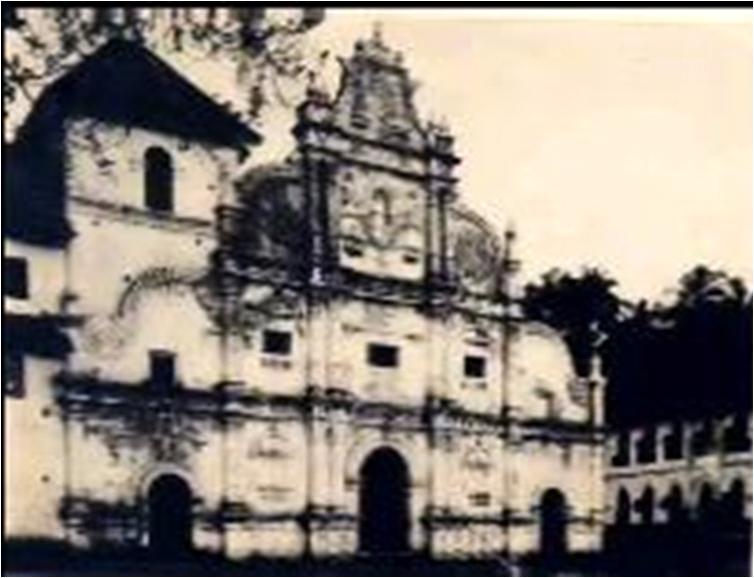
In 1593, Archbishop Mar Abraham appointed one of the nephews of Archdeacon George of Christ as his new Archdeacon. He was called George of the Cross. There were also other candidates for the dignity. Gouvea says that another nephew according to the custom had better claims to this dignity. In 1594, Archbishop Mar Abraham requested the Pope to appoint a coadjutor to him with right of succession. He indicated Archdeacon George of the Cross as the candidate. These letters were taken to Europe by Fr. Manoel Veiga SJ (( ARSI-GOA-MAL VOL,14, 310,336,357 ))
Archbishop Mar Abraham also wrote to the Jesuit General on December 17, 1594 about his desire to get the Archdeacon nominated as his successor. (( ARSI, GOA-MAL,VOL,14,f,198 ))
In 1595, Mar Abraham fell seriously ill. In the testament he made to Jesuits, the Archdeacon was announced as the administrator of the See after the death of Mar Abraham. In fact Mar Abraham wanted to make, the Archdeacon as his successor by the virtue of authority he had from the Patriarch of Babylon. But the Jesuits advised that it cannot be done and he requested Jesuits to obtain permissions from Rome.
After the death of Mar Abraham in 1597, the Archdeacon took charge of the administration according to tradition and commission from the testament of Archbishop. On hearing the death of Mar Abraham, Alex de Menezes, the Archbishop of Goa appointed Fr. Roz SJ as the Vicar Apostolic. Finally Menezes had to confirm Archdeacon George of the Cross as the administrator.
Archdeacon had to sworn to break all relations with Babylon by Menezes and Jesuits. He also co operated with Menezes for the convocation and handling of Synod of Diamper. After the Synod of Diamper Franics Roz SJ was appointed as Bishop. For some years the Bishop Roz and Archdeacon George of the Cross worked in peace and harmony. The Archdeacon was consulted on important matters and he enjoyed all his rights and privileges.
In 1609, Bishop Roz excommunicated the Archdeacon. The Archdeacon George of the Cross and party did not pay heed to this excommunication. The Major part of the Christians of Saint Thomas as well as Many Kings, Bishop of Cochin and Franciscans were on the side of Archdeacon. This rebellion continued until 1615 when it was reconciled.
Bishop Roz and Archdeacon were at odds again in 1618 and this continued till 1621. Before passing away the Bishop wanted to make peace with Archdeacon but Archdeacon did not seem to have answered the call. Bishop Roz left a nomination for Archdeacon as the administer after his death and Archdeacon George of the Cross under took that responsibility.
Bishop Brito was consecrated in 1624 and the Archdeacon received the bishop to Malabar. In general the relationship between Bishop Brito and Archdeacon were good except for two or three years.Archdeacon George of the Cross died on July 25, 1640.
3.5 Archdeacon Thomas
After the death of Archdeacon George of the Cross, Bishop Brito appointed Thomas, nephew of the late Archdeacon to the Archidiaconal dignity. There were also other candidates for the dignity and one was said to have more legitimate claims than Archdeacon Thomas. Things went on as before till the death of Brito in 1641.
Bishop Gracia SJ followed Bishop Brito. He did not like Archdeacon to have much part in the administration. He appointed a Vicar General apart from Archdeacon. The Archdeacon on the other hand wanted the Archbishop Gracia SJ to observe all the agreements which was in force. So from the very beginning of Gracia SJ, discord arose between the Archdeacon and the Bishop. There were agreements between the Archdeacon and the bishop but frequent quarrels broke between them.
In 1652, Mar Ahattalh arrived at Mylapore. Authors are not concordant with regard to Ahatallah place, rite and place of death. The Portuguese authorities arrested Mar Ahatallah and deported him to Goa via Cochin. The Archdeacon reached Cochin with a number of soldiers and demanded to see Patriarch Ahatallah and to examine his credentials. The Portuguese agreed first but soon they deported Ahatallah to Goa with out showing him or his credentials to the Archdeacon and his followers. The behavior of Archbishop Gracia SJ has been haughty. A false rumor was spread that Ahatallah was drowned by the Portuguese off the coast of Cochin.
All moved to Mattancherry near Cochin tied a long rope as tradition says to the open air cross called the Coonan Cross and holding the rope swore they would never be under the Paulists. ( ie, the Jesuits). All the Thomas Christians except a few ( 400 or 500 or 4000) adhered to those who had taken the Oath on Friday, January 3rd 1653.
A meeting was held at Edapally and then again at Alangat on May 22, 1653. Twelve priests imposed their hands on Archdeacon Thomas calling him Archbishop Mar Thomas I. Thus Archdeacon Thomas was ordained as Bishop and the role was changed.
3.6 Archdeacon Kunju Mathai
In 1656, Archbishop Gracia SJ excommunicated Archdeacon Thomas. Subsequently a nephew of Archdeacon Thomas who had claims for the position was appointed as Archdeacon. He was Kunju Mathai. According to the reports of Carmelites after the death of Bishop Gracia SJ, Archdeacon Kunju Mathai adhered completely to the Puthencoor group under the Mar Thoma I. There are not much information known about this Archdeacon after that.
3.7 Archdeacon Mathew
For many years Mar Chandy Paramabil, the Bishop of Catholic Syrians did not appoint Archdeacon. He was expecting a unification between the two groups. In 1678, Bishop Mar Chandy Parambil appointed Mathew as the “Archdecon of All India”. He continued till his death in 1706. He was the last Archdeacon among the Catholics as well as the last Archdeacon among the Saint Thomas Christians.
4. Tomb of Archdeacons (Arkadiyakons)
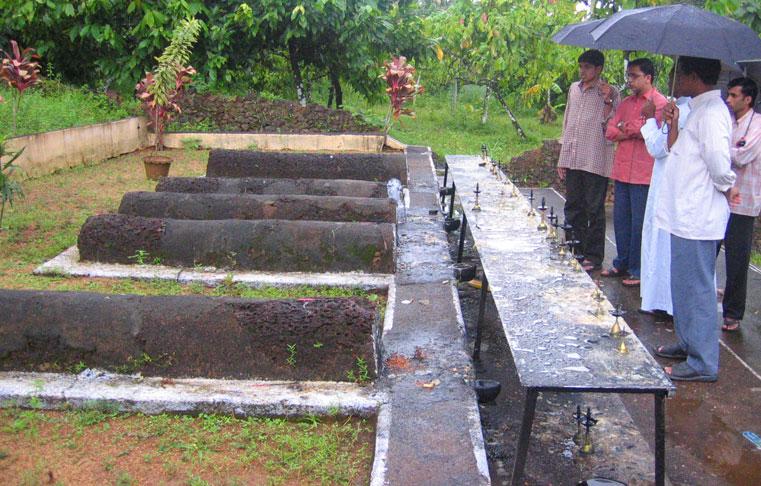
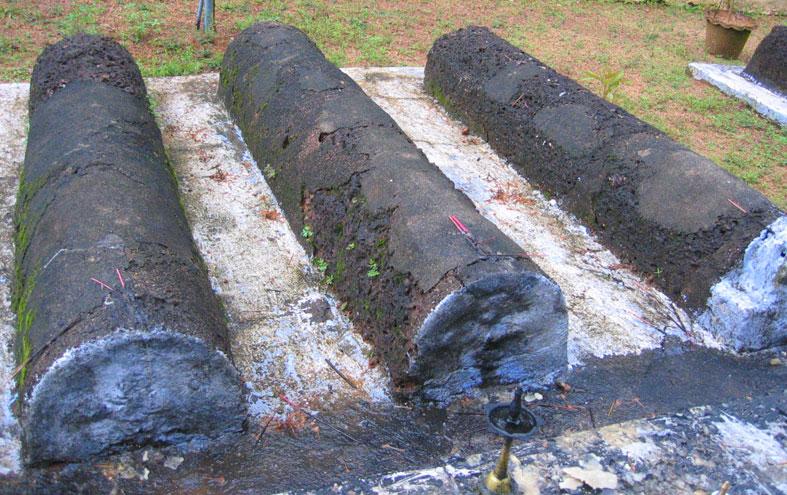
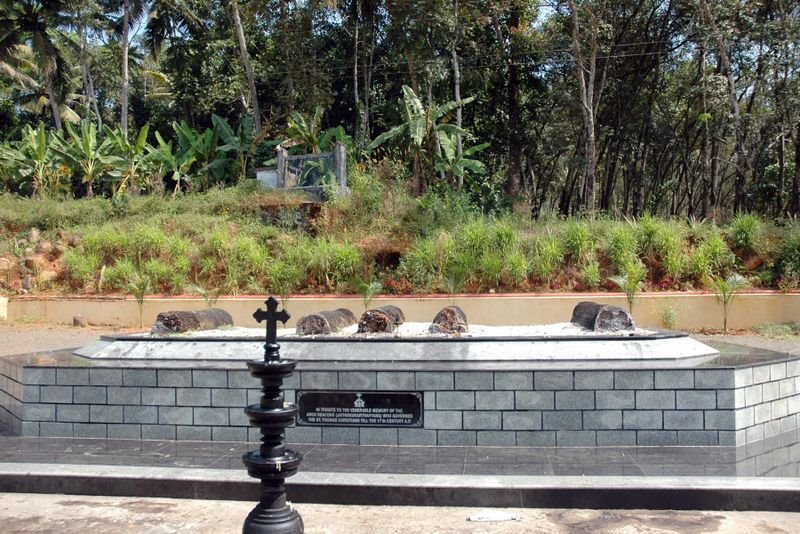
Kuravilangad has a unique place in the history of the Church of Malabar. The See of Archdeacon existed at Kuravilangadu prior to the arrival of Portuguese in India. The mortal remain of a few Archdeacons (Arkadiyakons), five tombs are still preserved at the Arkadiyakon Nagar, Pakalomattam Chapel of the Marth Mariam Church at Kuravilangad.
It is very unfortunate that enough importance is not given to this plot in history. The plot was in the ownership of Alappatt and Parakkunnel families. Around 1953 they gifted this land to the church. In 1963 a Cupola was built there. Alappatt Fr: Paulose was the Vicar of the church at that time. The Nalukettu ground floor was visible even at that time. The well is preserved. Twenty feet north of the well are the tombs of the Archdeacons (Arkadiyakons). Many favors are received for all those who seek their intercession.
The tomb of Arkadiyakons were renovated by the present Vicar of the Kurvilanagad Church, Dr. Joseph Maleparambil.
5. Efforts to restore Archdeaconate (Arkadiyakonate ) of India
There has been some efforts among the Catholics to restore the position.
5.1 Among the Catholics
In 1771 Fr. Ildefonsus a Praesntatione, who had been a missionary in Malabar submitted to the Congregation of Propaganda an elaborate report on the missions of East Indies suggesting appropriate means of betterment. One of his suggestion was to appoint a Chaldean Bishop in the position of Archdeacon to the latin rite Bishops in Malabar.
An assembly of the Catholic Christians of Saint Thomas in August 1773 agreed that there should be an Archdeacon to remedy the evils of that time. They submitted their grievances to the Arch Bishop.
In 1782, Dr. Joseph Kairattil was appointed as Bishop but he died before occupying the See. After this the Catholic Syrians did not ask for Archdeacons. What they asked since then was for indigenous Bishops or Bishops of Chaldean rite. In 1896, indigenous Bishops were appointed to govern them but the Bishops continued the latin style of administration.
5.2 Among the Malankara Orthodox
With the elevation of Archdeacon Thomas as Mar Thoma I, the role was changed from Archdeacon to Bishop. His line continued till 1815.
6.Summary
The only infra – episcopical dignity in Church of Malabar now seems to be a matter of history. This development was not a natural change in the Church of Malabar.Those who are thinking about restoring the rite of Church of Saint Thomas Christians to ancient glory should also restore the ancient office of Archdeacon (Arkadiyakon).
Acknowledgment
Pictures Courtesy – Fr. Rubin Thottupuram
________________________________________________________________________________
Author can be reached on admin at nasrani dot net
________________________________________________________________________________
The statement about Patrillineal succession is factually wrong. Nairs followed matrilineal succession.
I suggest you to seek advice from learned people when you are in doubt.
Also try to contact some reputed scholars and request them to write guest coloumn. That will be very helpful.
Could you please make it a habbit to include as many reference as possible, so that the interested reader can go further?
Very instructive, would like to read more and more on Nasranis.
John
I never thought that ,we were having an illustrious hertiage.
Keep it up. Continue the good job of updating our roots.
T.Jacob
Calgary,Canada.
Are there any other tombs of the preceding archdeacons nearby? Although the records of succession may not exist, the actual graves would be far more useful a tool in understanding our origins. Who was before Geevarghese Archdeacon — and if his name isn’t know, is his burial site known? Since Christians bury their dead, these graves must exist somewhere.
Yes there are six more tombs nearby. It’s known to many people here. It was even recognised by some priests and bishops too. They have made several requiems too their in the place. But they neglected it as it may alter all the histories already written by them.
I dont know if it is known.From the time of arrival of Portuguese till the Syond of Diampor we have some kind of clarity on what was going around.
Before that its hard to say.History is interloven with traditions and traditions. Its difficult to prove the existance of Archdeacons in earlier centuries. It is also difficult to make a point when the Archdeacons started also.
Dear NSC
I was not aware of the Jewish tradition in the history of Maratha Mariam Church Kuravilanagdu. Only few churches in Kerala celebrates feast of Prophet Jonah and Kuravilanagdu is one among them.
Being a prominent centre of Nasranis, Kurvilanagdu played major role in history in fight against latinisation and other things. But sadly over the last decades many of the traditions and rituals has been diaspperead. It is good that atleast the Kappalottam is preserved.
I am talking about Vechuuttu, Pachor Nercha, Thamuku Nercha. This has been completely disappeared from the feast over the last decades.
In Mununoyambu only the prevailing tradition of Kappalottam is preserved. We have lost many ethos of the feast over time. We can also see Chuttu Vilaku Nercha and Enna Nercha continued in Kuravilanagdu.
Can we start a discussion about Vechuuttu, Pachor Nercha and Thamuku Nercha.?
It is given in this site that the Orthodox church at Puthupally celebrate the Vechuuttu. Are their any other church other than this. Is there any church where , Pachor Nercha and Thamuku Nercha are still celebrated ?
Dear Ethak:
One comment regarding the Prophet Jonah. If you are talking about the 3 day fast done in his honor, it is called the “Rogation of the Ninevites”. It is most certainly *not* a Jewish tradition! It is a Syrian tradition — since the Syrians believe themselves to be the descendants of the Ninevites. The fast is done in honor of the Ninevites who implored God’s mercy after the prophecy of Jonah.
Again: this is not proof of Jewish origin (in case anyone wants to use it) as the Syrians of Mesopotamia developed this fast to remember how their ancestors, the Ninevites, fasted to gain God’s mercy.
This Syrian tradition originated in Mesopotamia and was originally followed by both the Church of the East and the Syriac Orthodox, including their descendants in Kerala. Through them, their Uniate schismatic factions (including the Syro-Malabar in Kerala which split form the Church of the East when the Portuguese came over) also adopted them.
It is also followed by our Orthodox cousins in Egypt, Ethiopia and Armenia to a lesser extent.
Dear John Mathew
I was not talking about Prophet Jonah as Jewish tradition, it is of Assyro – Chaldean, more of a sailors ritual. I was referring to the tradition of building churches at hilltop as Jewish. It is definitely Jewish custom to pray in hilltop. Sorry for the confusion.
Between John Mathew, you are very romantic. I have read some of your comments in other articles. I am pretty not much interested in this stupid original hair dialogue but i must say like NJ hinted you are extremely romantic. I am leaving the topic to some one interested to pick.
To be frank Syriac Orthodox in Kerala is a very late invention in Nasrani fold.
The Synod of Diamper which happened in June 20, 1599 was not for severing ties with Assyrian Church of the East. More than 50 years before the Syond of Diamper it was the Chaldean Patriach who was sending prelate to Malabar.
A schism occurred among Nasranis only after half a century as told in the Coonan Cross Oath in 1653. Note down the period Half a Century.The introduction of Syriac Orthodox started only after another two year, in 1655 after the arrival of Mar Gregorios Abdul Jaleel.
Mar Gregorios Abdul Jaleel was a good man and in fact he was against the Antiochisation happened later in the Jacobite fold.
As part of the Synod of Diampor latinisation did happen but the Syro Malabar and the new Jacobites kept the East Syrian liturgy. Only after another century large scale Antiochisation happened and in fact that’s what furthered the latinisation in Syro Malabar in later centuries.
Syro Malabar doesnot have any direct counter part and it doesnot come under your romantic Uniate definition. The only faction which is a close counter part is the Chaldeaon Church in india but that story is also not straight.
I just wish if our story was simple and straight forward.
Also even after all these things the Jacobite or Orthodox or the Syro Malabar has nothing in common with Orthodox churches. We are Oriental. The Non- Catholic churches are part of the Oriental rthodoxy and still have more things in common historically, traditionally with Assyro- Chaldean’s.
The Orthodox faction in Jacobite is just Orthodox in name sake. Eastern Orthodox and Oriental Orthodox are completely different.
Dear John Mathew
I am more interested in knowing more information about Vechuuttu, Pachor Nercha and Thamuku Nercha. This is a kind of open question I had for sometime which I did not get any satisfying answer.
Are you aware of churches in Oriental Orhtodx side where these rituals are still followed ? I think most of the Catholic parishes has stopped this practice.
These Nercha’s are painful, need lot of effort co- ordinated and doesn’t offer a source of income for the clergy and church. My understanding is priests are not finding any reason to continue this.
Also I couldn’t find any articles here on Syrian Chrsitian cousine. Can something be included ?
Dear Ethak,
1. The Rogation of the Ninevites is not a sailer’s ritual and it is not restricted to the Chaldeans. It’s a general Syriac thing. Your use of the term Assyro-Chaldean is restrictive. The Church of the East (the parent of the Chaldean schism) is not known by the “Chaldean” name (which was an innovation by Catholic missionaries in the east).
2. The Syriac Orthodox “thing” started after Mor Gregorios came in the 17th century. It’s about as “late” as the introduction of Catholicism in India (16th century). Your statement that Mor Gregorios was “against” Antiochization defies basic laws of cause an effect: how can a 17th century individual be against a process which commenced in the 19th century?
3. RE: your comment that the “antiochization furthered the latinization”. I find it hard to believe that the Latins would just follow the Jacobites — this makes no sense. Any proof or evidence? Antiochization was necessary for the Orthodox/Jacobites (same thing): since we went to the West Syriac faith, we needed to worship according to those norms. No big deal: the West Syrians were the parent church of the East Syrians anyways.
4. Do you know what Uniate means? The Syro-Malabar is definitely a Uniate church. The pattern is the same: the Roman missionaries come into an Eastern territory, gain converts form the local Eastern Church, and then — if they haven’t succumbed to latinization — they create a new archdiocese for the new “Eastern Catholic” group that is now in *union* with Rome (*union* —> *Uniate*).
5. Re: Orthodox, Oriental Orthodox
I don’t care about factions: there is only one Orthodox Church in Kerala and that is composed of the two Orthodox churches of the West Syrian traditions (which are split due to a stupid political fight).
I use the term Jacobite and Orthodox interchangebly because in Kerala they both refer to the West Syriac Church — no need to prefix Oriental, because there are no Eastern Orthodox churches in Kerala anyways, only Oriental Orthodox ones. And religiously, the Syriac Orthodox/Malankara Orthodox have more in common with our Oriental Orthodox brothers in Syria/Egypt/etc, than with the Assyrian Church of the East.
6. Finally, I don’t know why you think I’m a romantic. Perhaps it has to do with an absence of a dictionary on your part. I’ve never claimed that the Orthodox are the original faction. I’ve merely stated that the innuendos by some authors that the Syro-Malabar are the original Church is incorrect.
Dear John
RE. 1 I am quoting a passage from a paper written by The Assyrian Academic Society, which has answers to the questions you raised.
“The Chaldo-Assyrians of Iraq remain the world’s largest compact safekeepers of the
living Aramaic derived language, classical Syriac and its contemporary spoken and written forms. ChaldoAssyrians are also the heirs of church traditions that retain not only the Eastern understanding of Christian precepts, but also the archaic hymns and chants, fasts and feasts, as well as customs, that link pre-Christian Mesopotamian social and cultural history to medieval eastern Christianity.
For example, a very important fast within this tradition is the ancient Rogation (or Fast) of the Ninevites (a three day fast preceding Lent). For this Aramaic speaking Christian community, the Rogation of the Ninevites commemorates the Biblical repentance of the population of the Assyrian capital of Nineveh upon the behest of the prophet Jonah.
No other Christian group in the world relates to this pre-Christian occasion or sees the Fast as part of its heritage. “
My intention was to specify Kappalottam mentioned in this article as a sailors thing and Rogation of the Ninevites as an original Chaldo-Assyrians tradition. Syriac Christianity is inter linked and am not deducing what you mentioned. About the terminology of usage of Chaldo-Assyrians, please refer any of the Assyrian Academic Society papers or any other academic works. Its not a restrictive terminology, rather it is the widely used term.
RE .2 Your statement on introduction of Catholicism in India in 16th century is wrong.
There are letters written by Jordanus Catalani, the First Catholic bishop in India, Diocese of Quilon from Gogo in Gujarat (12 October 1321), the second from Tana (24 January 1323/4) exists which describes the progress of his mission.
From these letters we can learn that Roman attention had already been directed, not only to the Bombay region, but also to the extreme south of the Indian peninsula, especially to Columbum or Quilon in Travancore.
Jordanus’ words may imply that he had already started a mission there before October 1321. Jordanus, between 1324 and 1328 (if not earlier), probably visited Kollam and selected it as the best centre for his future work. He was appointed as a bishop in 1328 and nominated by Pope John XXII in his bull Venerabili Fratri Jordano to the see of Columbum or Kulam on 21 August 1329. This diocese was the first in the whole of the Indies, with juristriction over modern India, Pakistan, Afghanistan, Bangladesh, Burma, and Sri Lanka.
His writing “Mirabilia” refers to the author’s residence in India Major and especially at Kollam, as well as to his travels in Armenia, north-west Persia, the Lake Van region, and Chaldaea.
Much before St. Francis Xavier arrived in India in 16th century ( 1542) there were Roman Catholic presence and mission in Malabar.
A continuation can be seen with John De Marignolli. He was another Catholic missionary through China apparently reached Quilon in Malabar in Easter week of 1348 ( 1347) . At this place he found a church of the Latin communion, probably founded by Jordanus Catalani, who had been appointed bishop of Kollam by Pope John XXII. Marignolli remained here for sixteen months.
You should also keep in mind that Quilon and Kodungaloor were the two major centers of Nasranis in those period.It is very much debated thing that whether the missions these Catholic missonaires conducted has some relation to Nasranis with varaying observations and differential findings.
I am not clear on your statement on Antiochization in 19th century. I said Mar Gregorios was against Antiochization when he reached Malabar in 1655 and during his tenure.
RE 3. About Antiochization furthering latinization, I can explain my observations later as it is time consuming. West Syrians parental church of East Syrians is a far fetched claim. In those consideration, I can not blame the Catholic Romans who claim as the parental church of all with at least some valid considerations.
RE 4. About Uniate term. The term itself is the invention of Rome, so I rather prefer to consider their own definition as worthy of consideration. It is used primarily to refer Eastern Catholic Churches who were previously primarily Eastern Orthodox ( EO). Gradually the usage was extended to all Eastern Catholic Churches by Latins and by Eastern Catholic till Second Vatican Council in purview of a unity among East and West. Syro Malabar doesnot come under the definition as there are no direct counter parts.
RE 5. At present there are no Eastern Orthodox ( EO) church in Kerala. God only knows what future has in store. Antiochization has made some similarities with global Oriental Orthodoxy just like Syro Malabar replicated latin but the Oriental Orthodox churches in Kerala has more to do with Assyrian Church of the East and Oriental Orthodoxy than Eastern Orthodoxy.
I agree with you on the stupid political fight as the reason of split in Oriental Orthodoxy in Kerala. That’s not a situation just with Oriental Orthodoxy. There are stupid political fights in every churches. I just wish that atleast if the younger generation can abstain from these kind of fights .
I think you have a bit of confusion regarding terminology, Ethak.
Regarding 5. I think you are a little confused here. The Syriac Orthodox Church (i.e., the non-Chalcedonian Church of Antioch) is an Oriental Orthodox Church. There is also Greek Orthodox Church of Antioch which is Eastern Orthodox and *not* Oriental Orthodox. The latter Church has no connection with Kerala, so when I (or anyone else on this forum) says “Antiochene Church” we mean only one Church and that is the Miaphysite (Oriental orthodox) Syriac Orthodox Church. The Syriac Orthodox Church is the mother of the “Jacobites” in Kerala and their schismatic faction, the Malankara Orthodox. Both have **nothing** to do with the Assyrian Church of the East other than our people are genetic descendants of people who used to be of the Assyrian Church back before the time of Mar Gregorios. But the moment we *converted* to the West Syrian faith, we became Oriental Orthodox, and the Oriental Orthodox view the Assyrian Church of the East as heretics. (Not me personally; this is the official position). A major sticky point: The Assyrians are Dyophysites, whereas the Oriental orthodox (including the Syriac Orthodox) are Miaphysites. The Assyrians reject the term Mother of God, and instead say Mother of Christ–the orthodox reject this (and so do the Uniates)!
Again: you are mistaken in claiming the Oriental Orthodox includes the Assyrian Church of the East. Sorely mistaken. The Assyrian Church may be “oriental” in that it is in the east, but the term “Oriental Orthodox” has a very specific meaning which you are transgressing when you apply it to the Church of the East.
Re 4: The use of the word “primarily” is important to recognize there in your copy from Wikipedia! The *majority* of the Uniates were *primarily* from the Eastern Orthodox, yes. But there are Uniates (or Eastern Catholics if you want to use that longer term) from other Churches: the Uniates from the Church of the East (both in the Middle East — the Chaldeans — and in Kerala, the Syro-Malabar), and the Unitaes from the Jacobites (the Middle Eastern “Syrian Catholics” and the Kerala Syro-Malankara). And sure the Syro-Malabar have a *direct* counterpart: their brothers back in Assyria, the Chaldean schismatics! The only difference: the Syro-Malabar allowed themsleves to be Latinized, whereas the Chaldean Catholics retained their identity. And the syro-malabar only got the right to start using the original Qurbana in the 20th century — before that they had to use whatever their foreign masters told them to use.
Re 3: This is basic Christian history! You can trace all canonical Orthodox/Catholic Christian communities to the five original patriarchates–everyone *HAD* to get a valid episcopal ordination from one of the five. The Church of the East were originally under the Patriarch of Antioch and split during the Nestorian controversy; any historian knows this. This is not some far-fetched theory or opinion. Go and read the history of the Church of the East — their Catholicos asserted independence from the Patriarch of Antioch and become an independent Patriarch-Catholicos! I’m not talking about the Church in India being under the Patriarch of Antioch — I’m saying back up to the 4th century, the Church of the East was under the Patriarchate of Antioch.
Re 2: Fine, there were Catholic missions. But the Syro-Malabar started only after those missionaries started to target our community and kidnap our prelates. Before that, there was probably no big attempt at converting us to Roman Catholicism.
Re 1: From the looks of their site the The Assyrian Academic Society is an East Syrian Catholic group — note the term “Mother of God Church”! It is probably not a uniform Assyrian association at all! Otherwise they wouldn’t use the term “Chaldean” which is a hugely contentious term in the general Syriac community. If you want to read their position on history that would be akin to me reading a Mar Thomite history book for the history of the Nasrani community — it’s bound to have distortions.
The Church of the East most certainly does *NOT* refer to themselves as Chaldean. The term Chaldean was introduced by Roman Catholic missionaries to label their new schismatic fruit: the Chaldean catholic church. The Chaldean *patriarch* himself talks about this: he says “religiously” he is a Chaldean, but “ethnically” he is Assyrian and that the label Chaldean was introduced by missionaries. (You can search for this info yourself: the controversy in the Syriac community regarding labels is huge! Aramean vs Suryoye vs Assyrian vs Chaldean — these are loaded terms, Ethak.)
The Syriac tradition of the rogation of the Ninevites is a general Syriac thing: both the Assyrian Church of the East (including its Uniate counterpart, the Chaldeans) and the oriental orthodox Syriac Orthodox Church observe it. AND the other Oriental Orthodox Churches observe it too, to a lesser degree.
Dear John Mathew
I am not confused about the terminology. I said Oriental Orthodox churches in Kerala has more to do with Assyrian Church of the East and Oriental Orthodoxy than Eastern Orthodoxy.
Eastern Orthodoxy is entirely different than Oriental Orthodoxy.
Oriental Orthodox churches in Kerala were earlier part of Church of East but later on accepted Oriental Orthodoxy. There are still many traditions of Church of East prevalent In both the factions of Oriental Orthodoxy in Kerala.
Assyrian Church of the East are Oriental but not part of Oriental Orthodoxy because of rejection of Council of Ephesus in 431. They were not in communion with any one earlier. Recently there have been agreements with Catholic Church. I didnot say they are part of Oriental Orthodoxy. They are Oriental.
I belong to Syro Malabar and know very well about people who get in to street on hearing the term Chaldean and a minority who supports the Chaldean. I don’t have a stand on this. It is the anti Chaldean’s who call shots in Syro Malabar.
Most of the differences in doctrine was never more than a misunderstanding of Christology . These differences in Christology are almost sorted out and their are christilogical agreements signed and discussions going on.
RE 1. I can not agree with your explanations. It is the Chaldeans ( 70%) who are majority in Iraq and Assyrians ( 15 %) do not count much and cant stand with out unity in the hostile situation in Iraq. I personally know Chaldean’s and Assyrians and it’s the Chaldeans calling shots based on their strength in Iraq.
The previous Chaldean Patriarch Mar Bedaweed I in the year 2000, declared him as being an Assyrian from an ethnic point of view and a Chaldean from the religious one.
Quoting Monsignor Jacques Isaac, General Secretary of the synod of the Chaldean bishops and Chancellor of the Papal University of Baghdad.
“”We do not accept who adorn himself with the title of representative of the “Chaldeans-Assyrians because this is an attempt by the Assyrians to englobe the Chaldeans, using it as a point of force.” ( Feb 2004)
(http://www.christiansofiraq.com/lugia.html)
The compound name ChaldoAssyrians has been used during the last two years to counter attempts to divide the Assyrians.
(http://www.christiansofiraq.com/yuash8305.html)
The Assyrian- Chaldean story is not straight forward like one group leaving and joining another. There have been to and fro moments through out the history. Historical distortions doesnot come much here as both are just factions and that too with a history of shifting allegiance for both.
I think only in Kerala we have this much of historical myths and differences. In most of the other Eastern Churches the history is presented much better than Kerala situation.
Off lately there have been joint efforts (http://www.zenit.org/article-2763?l=english) and these days they can even celebrate sacraments at any church.
RE. 2 Kidnapping prelates is a story. In Mar Ahatulla’s case the credentials were questionable from a neutral point of view. I agree that before the Syond of Diampoor there was no large scale attempts to introduce Roman Catholicism.
RE. 3 I cannot agree with you there. There are people who say Church of East or Babylon ( my understanding is this was the terminology used earlier ) is from Patriarch of Antioch.
That’s not completely true as Babylon patriarchs are from the see of St. Thomas and they call St. Thomas as the first Babylon patriarch.
The Patriarch line is — Saint Thomas, Mar Tulmai, Mar Addai, Mar Agai, Mar Mari,Mar Abris……..
Patriarch of Antioch is from the See of St. Peter and has a different line.
The Patriarch line is — St. Peter, Evodius, Ignatius, Heron, Cornelius, Eros …………………
RE 4. The Eastern Orthodox- Catholic split is generally dated from 1054 and after that there had been many councils on unity and unification. Many factions from Eastern Orthodox rejoined Rome. Till Second Vatican Council they were just treated as rites and uniates and after the Second Vatican council they have been started recognising as Sui iuris (autonomous ) churches.
Syro Malabar doesnot represent as a Uniate from Church of the East. Your definition stands only if there can be a new Uniate from another Uniate (Chaldean to Syro Malabar ) . What I understand is the term itself is outdated but still holds good concerning the Eastern Orthodox churches and their Catholic counterparts. I have even heard some Eastern Catholic Churches discussing which side to join.
Let me ask you what do you call the schematics from different Orthodox and Oriental Orthodox Churches.
Example -Your response in RE.5 – Greek Orthodox Church of Antioch and Syriac Orthodox Church split over Council of Chalcedon AD- 451. The schematics here are Syriac Orthodox Church.
You call Syriac Orthodox Church Miaphysite. Weren’t they were also called Monophysite ? Personally i don’t have any issues in referring as Miaphysite as there have been gradual changes in every churches official position.Thats true with some terminologies also.
2007 Kappalottam Youtube Video
httpv://www.youtube.com/watch?v=au4n5opsVxs
Curtsey- Lijesh Kuravilangadu
Dear Ethak,
1. This isn’t history by majority vote. Just because X is in the majority does not mean that X is the older community. For example:
a. In Kerala, the Syro-Malabar number in the millions, whereas the Church of the East in the thousands. Yet it is the latter that is older.
b. In the UK, the Protestants exceed the Catholics, yet all were originally Catholic.
c. The anti-Chaldean faction of the Syro-Malabar (i.e., those who don’t want to let go of their missionary-induced Latinized faith) and the Chaldeans are another example. The latter have a claim to antiquity since they at least want to go back to the forms of their original faith, whereas the latinizing faction wants the opposite. Whos the majority? The Latins. Who’s “older” or represents the older ideal? The Chaldeans.
d. My own Orthodox Church gives another example. The Jacobites are smaller than the Malankara Orthodox; however it is the Jacobites who represent the more legitimate view, since we follow the West Syrian rite and the Patriarch is the ancient head of the West Syrian Orthodox faith. (Note: I belong, by ancestry, to the Malankara faction, even though I reject its position.)
The Chaldeans split from the Church of the East, pure and simple. Any historian will acknowledge that. Just because the Chaldeans are more in number, proves only that the Romans were very adapt at converting people.
2. I’m not going to go into the origins of the Babylonian Church. The history of this is fairly straightforward, and you can go and read a real historian to get the truth. The Church of the East is not one of the Pentarchy — so they must have gotten their episcopal ordination from somewhere… who do you think that was (until the council of Ephesus)? Your statement “They were not in communion with any one earlier” is extremely erroneous! They were most certainly in communion with the original Church which was administered by the Pentarchy (and it was the Antiochene fifth that handled the eastern churches).
3. In Antioch the Greeks and the Syriacs split over the Mia/Monophysitism issue — however, it was a lateral split. The Greeks can not claim that Chalcedonian christology predates Non-Chalcedonian Christology. The split occurred horizontally, and so an impartial observer can not claim either is the “legitimate” or “original” faith. However, you, as a Catholic follower of the Chalcedonian faith may wish to impose your view and say that the Greeks were right and the Syriac were wrong. That is your opinion. I as a Mia/Monophysite reject that.
4. Your use of the term “rejoin Rome” is typical of Catholic writers. The view that the Romans represent the original, undivided Church is controversial and not accepted at all by any of the Orthodox Churches (Eastern or Oriental). Indeed, the Romans introduced several innovations which damages its claim to be the original Church (which is why the Oriental Orthodox split, and why the Eastern Orthodox also split later on — because Rome was modifying the faith). The Orthodox who left Orthodoxy and joined Catholicism are hence schismatics — they did not *re*join anything, since they were not Catholics to begin with. The only Eastern Catholic group who can enjoy the claim of not being a mere schism of the orthodox/assyrian church are the Maronites. But apart from them, anyone else using a non-Latin liturgy was original a member of either: a) the Eastern Orthodox, b) the Oriental Orthodox, or c) the Church of the East.
Now, there is no point to us arguing since most of these issues are not a matter of opinion but of fact, and can be resolved by appealing to a history book (preferably written by a historian and not an Orthodox/Catholic church writer).
But I do have a question for you Ethak you could help me with:
You mentioned that there are still many Church of the East attributes in the Malankara/Syriac (West Syrian) Orthodox Churches. I would like to know if you could tell me what they are, since I am very interested in this.
I found this site via Google while searching for Munnu Noyambu Perunnal. All articles are interesting to me. I have seen many sites before and most of them do not look this good. Thanks for the excellent content.
Wow….. I am very much impressed….. I have been trying to promote blogging… and its a great effort… wonderful..
RE: Tomb of East Syriac prelates
Does anyone have any information on where the various East Syriac (i.e., Church of the East, and later on, Chaldean) prelates were buried in Kerala?
I believe that Mar Gabriel, a “Nestorian” bishop who was influential in some Puthenkoor Churches in the 18th century, was buried in the Orthodox Cheriapally of Kottayam.
But what about Mar Simeon, Mar Abraham, Mar Denaha, etc., from the pre-Diamper era?
The office off arkadeacons were at ankamali, that means mala they ruled malankara nasranies from sitting angamali , even though they where from kuravilangadu. That is why still angamali has very much importance in all the syrian christian groups. Also the arkadeacons are from pakalomattom familly and it is needed that the arkadeacon should be a priest. They can be normal believers (or almenikal) but should be a male from pakalomattom familly.
It was seemed to be the syro-malabar sect forgotten about the tomb of the arkadeacons or may be forgotten about the importance of the arkadeacons upto some four five years back..It was only the catholicose of MOSC who used to conduct the rememberance mass there for many years and it was only some five years back the syro-malabar sect also started to conduct the rememberence mass there…
Any how its an important place for all the Malankara Nasraneys since they were the arkadeacons or Jathikku Thalavan for the nasranies in kerala.. Its the samillar post like azhvancheri thambrakal over the brahmins in kerala once. They were really like the king of nasranis in kerala and thats why all the kings of kerala always tried to make him to stand with them..It is very important that during the synode of diamper all the local kings of kerala was behind arkadeacon not with portugees.
Dear Joncy Panikker,
I have followed your earlier posts too in addition to the present and find that you are trying to establish a hierarchical leadership for nazranis starting with the Pakalomattom family and the Archdeacons (Arckadeaocan) from that family. There is a point that I would like you to ponder over. Was it necessary that this archdeacon be a formal priest or is it that they followed the age old Jewish tradition of Rabbis. As you know Rabbis were and still are not formal priests as we Christians understand that title and office. It is more like Jathikku Thalavan as you have so aptly called the Archdeacon in Malayalam.
If you were to accept that this was a traditional Jewish Rabbanical family then the idea that they should be priests can be dispensed with. Remember there is no historical records showing the Arckadeaocan at the time of Udayamperoor was a formal priest or that he had any religious functions other than spiritual and perhaps temporal leadership over nazranis. In an earlier post I had suggested that when Thomas came to India he came with little by way of literature or ideas that were truly Christian. He was a Jew just as his Guru and master Jesus Christ. One should doubt whether he was at all a priest or even a Rabbi. The idea of a priesthood was probably not even latent immediately after Thomas. One should logically accept that the leaders were just that, LEADERS, much like Rabbis as it was in the Roman Empire. The differentiation started or so it seems from the time RC church started in Rome. But the true differentiation became evident from the Nicene Synod in 325CE. The pre Nicean Christians in the Imperial Roman Empire did not claim to be priests and Bishops and Popes. Those tittles seem to have been thrust on them after the RC church gave it to them expost facto. And we Nazranis accepted that although we were not a part of the RC church except for a brief period of Portuguese intrusion.One should be careful in asserting that the Nazranis of Keralam were truly represented in this Nicean Synod despite the signature of a Persian Bishop supposedly our formal representative.
I suggest that these are areas that require to be studied and if the said Pakalomattom family were Jewish Rabbis originally we must accept that without priesthood.
B.George
Johncy:
I don’t think that all Nasranis were uniformly interested in the Pakallomattom Archdeaconate of Angamali. The Nasranis in the South seem to have been neglected by the Northern prelates, and weren’t averse to establishing relationships with the Portuguese. Ref: Jornada.
Mar Abraham the last prelate from the East Syrian Church prior to Synod of Diamper was laid to rest at the St Hormis (Urumis)Catholic church at Angamalee at the heart of the town. His tomb is still there. It is today a chapel. The parish church, moved to the a few hundred metres to the west, is today the gigantic basilica supposed to be the biggest church in India. Adjacent to this basilica is the old Jacobite church. There are many vestiges of history still visible.
B. George,
I think it is likely that one major input to the Nasrani pool were Jewish converts. This can be partially-demonstrated via the presence of the Cohen Modal Hap., as well as via various family traditions that refer to Jewish ancestors. And we have the custom of Pesaha which is unparalleled in other Christian communities. Plus, there are the copper cheppads in the possession of the Syriac Christians that have Jewish signatories.
But there is also evidence that another major input were the ethnically Persian Syriac Christian communities that settled in Malabar, for which there is more recent direct evidence (Pahlavi Cross, the traditions of families around Kollam, other cheppads).
It is interesting that Pakallomattom seems to have the CMH (according to some samples in the Syriac Christian DNA project). But as far as I can see, from all the available Syriac literature from Kerala from the 14-th century onwards, the Nasranis seem to have been pretty standard East Syriac Christians. Certainly the output of the Pakkalomattom family (some were scholars who wrote manuscripts that still exist) show nothing other than East Syriac works.
I think that our Jewish partial ancestors were probably active a thousand years ago, and so there are not remains of them (apart from in our genes, for those to maintain patriarchal lineage, and in some of our customs).
John Mathew
Reference to post 41481. Could you give me more details of Cohen Modal Hap that you had referred to in the post?
B.George
B. George:
You can check wikipedia for further details. But essentially it is a characteristic of the patriarchal DNA that seems to be present in a large percentage of Jews who have a tradition of being Cohens, which is the Semitic word for priest (Hebrew, Aramaic, Akkadian, etc.). What some researchers found was that, regardless of geographic origin, the Cohenim of the various groups of Jews in the Diaspora had this marker with high probability. This seems to coincide with the Hebraic tradition of the Aaronic priesthood being passed from father to son: if this was the case, all members of the Aaronic priesthood would propagate their patriarchal DNA markers.
This isn’t 100% however. Not all possessors of the marker are Cohenim, and not all Cohenim have the marker. As well, there are two classes of the marker.
Perhaps someone who understands this area deeply (e.g., Jackson) could further comment. Or you could go and read the wikipedia article and study its sources.
On the Nasrani side, it seems that some of our people also carry this marker. There was George Mathew, as well as (if I recall correctly) the admin of the Syrian Christian DNA project, who is Pakallomattom.
If the latter is representative, it does seem that Pakallomattom may have been converts to Christianity from Judaism. However, whether they converted to Christianity in India or in West Asia cannot really be determined.
It does seem strange that many of the St Thomas myths floating around in Kerala seem to have West Asian parallels (e.g., the myth of St Thomas throwing water in the air and it being suspended: that seems to be an import from the MIddle East). Perhaps it wasn’t Thomas who came to India, but rather the families of those he converted in West Asia who came to India, bring their myths.
B.George,
Your insights are valuable. The early Christians of Kerala may be of Jewish origin. When Apostle Peter spoke on the day of Pentecost, there were Jews from Kerala, who came here for trade. So they came back and spread the gospel here. Moreover Apostle Paul tells that the name of Jesus had reached all over the world in the first century itself” Colossians 1:5 “because of the hope which is laid up for you in heaven, of which you heard before in the word of the truth of the gospel, 6 which has come to you, as it has also in all the world, and is bringing forth fruit,[b] as it is also among you since the day you heard and knew the grace of God in truth;”
I heard that there is a meeting scheduled at Kurvilangadu, regarding the history of Syrian Christians, arkadeacons and traditions at Kuravialangadu, in the next month with lots of video clippings. I would like to attend the meetings. Does any one know of it?
Aji Matthew
Where do you see references to Kerala Jews being at Pentecost? You say this so easily… Can you cite evidence?
Dear Aji Mathew, I would like to have more information about that fact. I never heard any incident that jews traveling back to westasia. Other than that i heard/ feel there were jews made their way to kerala after all this as jew who held in damascus many of jesus followers and the syran suryoyos. Later they began to dispersed from other safest places.
Aji,
The news has some manorama daily on 21st aug 2011. Heads from most the chruch are invited.
This will happen on 5th of September 2011, based on the DNA research by Mini Kariappa. From around 2000 dna sample.
Thanks
John davis
Dear John Davis,
Thanks for your information. If God allows, I will be there. I hope some NSCs will turn up too! So we will have a fellowship.
Dear John Mathew,
I am gathering more proof of Jewish presence since Solomon’s time and Jewish colony in Kerala. I am exploring it with the Prof. P M Varkey former HOD, History of UC college Alwaye. I will come with clear evidence of it. Do you need to know the history of Mulanthuruthy Jacobite Church which once you asked for? I have their souvenir and the contacts of the one who knows all things related to that church, a former trustee of the church?
Thanks a lot for your comments.
Aji Matthew
Dear Mr Aji Mathew,
Since you are interested in History, I do not know whether you can throw some insights to the background of the Morakkala church at Pallikkara. Also some authentic details of St Yeldho Mar Baselios who lived for just a week or so after reaching Kothamangalam.
Regards,
George Joseph Enchakkattil
The tombs of Archdeacons (Arkadiyakons) from Pakalomattom family exist at Kurvilangad area (Kootarappally, about a mile south of from St.MAry’s church Kuravilangad). In recent years there have been
renewed efforts to improve the cite and write the historical details. “Paklomattom” written by Fr.J. Kottayil gives details about it. Ann
The king of Cochin was not with the arkadeacon during the synod of diamper. He was a vassal of the portuguese. He has sided with them and made the arkadeacon to agree to come to the synod and later he also imposed Paravu on christian chandas (markets) to force the nazranis accept roman rule. Even the rani of thkkumkoor also has sided with the portuguese. Please read Jornada for more details
Dear Joseph Enchakkattil,
If you wish to get the details regarding Morakkala Church, I can bring it to you. I have good contacts over there so I can provide the details. If you wish, please tell me.
Aji Matthew
Dear Mr Aji Mathew,
Yes, I am interested and if you can tell me to whom I should contact, perhaps I myself can get it. I am staying at Kakkanad and so it is not too far. Incidentally, I have heard that Morakkala parish was formed from Edappally Church in good sense that there are some 100 odd families in and around Pallikkra. But the encouraging aspect about them is that when almost all of the Malankara Churches went after Bishop Menesis because of the torture and all, Morakkala is one parish who showed courage to ignore Menasis and disimissed him from their minds. They survived the torture and never turned latin even for an hour. I am keen to get a confirmation to this. Also, this church has a prortrait of St Baselios Yeldho. Is this a true one or some body’s imagination?
Thanks,
George Joseph Enchakkattil
Dear George Joseph Enchakkattil,
I am collecting the details regarding Morkkala church and will be informed you soon. You can try the following link to know the official version of the church in the link http://syrianchurch.org/ch/pallikkarachurch.htm
Faithfully,
Aji Matthew
Dear Mr Aji Mathew,
Thank you for the interest you have shown and the efforts you are taking to help me. In the meantime, the link you have provided is not opening. Even my direct effort with the church site too failed with the usual commet, “this page canot be opened”. Anyhow, please don’t bother. May be after a couple of days later I can try.
Regards,
George Joseph Enchakkattil
Dear all participants at NSC net work,
Will any one come to the meeting at Kuravilangadu regarding the DNA details of Syrian Christians. If God allows, I wish to be there. Kindly acknowledge, if any one turns up.
Aji Matthew
Dear Aji Mathew,
Could you please send (or post) details of the meeting at Kuravilangad and presentations to be made regarding “DNA details of Syrian Christians”?
Thanks,
Kuruvilla Cherian
Dear Kuruvilla Cherian,
Yes. The details are given in today’s Manorama (there are two Manoramas today)please take the one “Kerala goes to neighbours to prevent poisonous food” and turn to the second page. It is under the heading “Christian scholars meet (“Kristava panditha Sammelanam”). I hope to be there, if God allows. My Mobile no. is 9847420139.
If you come, we can meet there.
Faithfully,
Aji Matthew
Dr. Kuruvila Cherian: The meeting is at Arkadiyakon Nagar Kuravilanagdu. The interesting point is confirmation that the Shankarapuri, Kalli, Pakalomattam, Kaliyankal DNA tests shows a Jewish ancestry. They also demand the establishment of a Saint Thomas historical university. Those involved are K M Mani, T M Jacob, George Menanchery, Abraham Benhar, George John Nidhiry etc .Abraham Benhar recently has published a book on the Jewish ancestry of Thomas Christians. Quite interesting that these were the things discussed here for a long time.
See the news : http://www.2shared.com/photo/3Jho0798/Capture.html
There is the Chaldean Syrian Church of the East based at Trichur which claims an unbroken link to the Syriac traditions in spite of many (almost successful) attempts to absorb it by the Roman Catholic Church even up to recent times.
The Patriarchate is based in Bagdhad, Iraq, now shifted to the US due to religious intolerance.
Since it has been reduced to a small community in India, it tends to be overlooked in these discussions.
Many ancient manuscripts are still preserved at the metropolitan’s palace in Trichur.
Dear Kuruvilla Cherian,
I attended the meeting only the forenoon session. The main topic was the DNA result by Dr. Mini Kariappa. She claimed that Jehovah appeared to her even in the small childhood and told her that she belonged to Israel. When she grew up, she got the vision again and made her to do the project on DNA. She concluded that Brahmins, and a good number of hindu sects and Syrian Christians (not all) are the lost tribes of Israel. She warned that these people are vulnerable to cancer and advised not to use aginimotto, noodles and exposure to sun.
George Menacheri told that her findings will bring a collision withe the St.Thomas theories, hence Syrian Christians are Jews not Brahmins. I wanted to listen to the after noon session but couldn’t. The mood I felt that the participants seemed to be proud of their relations with Pakalomattam and other three families.
I hope that more details of the after noon session will come out later. But I felt the mood that this is a clever way to make the christians of Kerala were connected to Rome. I believe that Rome did not have any dominion over here because if they had, Menesis would not have done his terrible work and destroying the complete history of Kerala. Even they have given the meeting name “Mar Thoma Christians”. However the truth will come out and we have only one heritage, that is the heritage of Jesus Christ, our Lord and Saviour.
Faithfully,
Aji Matthew
Dear Aji Matthew,
Your last posting is interesting, but you have not said in detail what is Mini’s findings. Can you provide Mini’s email or other address.
Weak people will always be proud, no matter what.
Aji Mathew: You went to the wrong place if you were expecting some anti roman bashing. Kuravilangad is the Catholic fortress and that’s why the first indigenous Catholic Metropolitan was from there. Anyway what has this meeting to do with Rome ?.
The organizers, Saint Thomas Nasrani Yogam is an association of Shabkarapuri, Kalli, Pakalomattam, Kaliyankal, Niranam and Nilackel families. Is there something wrong in the notion of meeting of Mar Thoma Christians. What a prejudice and historical blindness !!
Papers were presented by Dr. Mini Kariappa, Dr. Xavier Kodopuzha, Dr. Jacob Thekeparambil. Dr. Mini Kariappa thesis is based on some 2000 DNA samples. Mar Aprem Metropolitan ( Chaldean) , Mar Ougen Kuriakose ( Indian Orthodox) , Geevarghese Mar Barnabas( Jacobite) attended.
They also demanded establishment of Saint Thomas historical university, holiday on Saint Thomas day and subsidy for holy land pilgrimage.
Dear Tom Mooken The chaldean church at trichur was part of the Pazhayakoor (catholic church) from AD 1552 till the Mellusian schism in 1882. So they do not have unbroken line of connection with the chaldean church of the East
Dear Georgekutty,
Thanks a lot for your comments. To be frank I am neither Roman nor anti Roman but a simple seeker after truth. You yourself wrote that “the first indigenous Catholic Metropolitan was from there”. It can simply tell you that there was no Catholic Bishop in Kerala till that time. When Catholics have Bishops and their records all over the world, there is no such list in Kerala, it is because there was no such connection. Moreover there are clear proofs why Chandapillil Kathanar joined Catholicism. He was with Coonan Cross oath and shifted loyalty. Do you know why? If not, I can write it to you.
Again you can see the tombs or Archdeacons. There is no cross or special regarding them. They are simple tombs only. You can see the old pictures of them in the NSC net work itself. What does it say? They were not Roman Catholics. If they were so, there would have catholic symbols of worship and Catholics would have started pilgrim centre there. You can see such pilgrim centres all over Kerala. Catholics do not have any position in the history of Kerala Christians before the coming of Vasco Da Gama.
I am going to meet Dr. Mini to get more details about her test. If it is proved,Syrian Christians have Jewish DNA, then Brahmin conversion theory and St. Thomas theory will be in the dust bin.
I am ready to accept the facts not grandma theories as it was told about St.George. We are living in modern world.
Aji Matthew
Aji Mathew: I don’t care about your claims. But I do care about what you were trying to do. How can you even think of attributing this to a meeting organized under few families ? The families of Shankarapuri, Kalli, Pakalomattam, Kaliyankal, Niranam and Nilackel are both in Catholic and Orthodox churches. Of course among Catholics, they are a large majority. Your vein effort to attach Roman and Anti Roman to a meeting, which discussed about DNA, is just pathetic as your inferiority complex.
I do not read the forum here for going through stupid Pentecostal style bashing. I read it for information about my history. It should be good that you keep your complexes with you and try to get benefited by the information provided here.
Yes, Pallivettil Chandy Kathanar is the first indigenous Catholic Metropolitan in India. I don’t know if there were any before that. Do you happen to know any indigenous Metropolitan before him other than Archdeacon Thomas ? If you don’t, then there is no point to discuss the unknown. I know my history. You said something about why Pallivettil Chandy Kathanar was reconciled after Coonan Cross Oath. Why don’t you cite your documents and share ? If you just have your stories with out any documents to cite and provide, i don’t even care to listen those. I am sure you know what to do with those stories.
Catholics has many pilgrim centers in Kerala. Do you have your complex there too? Arkadiyakons tomb is also a pilgrim center. It is a tomb which was left without any care for centuries and renovated many times. Your story of symbols, cross has no meaning. Also, Catholics don’t need a certificate from a Pentecostal style basher on their role in Indian Christianity or its history.
What about Saint George ? I don’t care what you take, nor about your personal view. Do not try to mix your complexes on everything so as to cause information distraction.
All
I read from here about the Catholic bishops and missionaries who came here before the Portuguese and what they have written about the Thomas Christians. Before the Udayamperoor Sunahados, the bishops in Malabar were Catholic Chaldeans. But what I have not read here is the Catholic connection to the Patriarch’s of Church of East. We were under Church of East before the Chaldeans. After the division in fifth century some of the Church of East Patriarch did had cordial relations with Rome and some of them joined Rome as well. This is not to prove any point, just to show how interesting the history is.
Let me share an interesting document from the Vatican Secret Archives. I am sure some of you might have heard about the great Patriarch of Church of East, Mar Yahballaha III (1245–1317).
Before elected as the Patriarch, he was known as Monk Morqous bar Turkaye ( Son of turk). His origins were Mongol and Chinese on mothers side and turk on father side. In 1281 he was elected as the Patriarch of Church of East with the name of Mar Yahballaha III.
In 1287, Patriarch Mar Yahballaha III send his profession of faith to Pope Nicholas IV. In 1302, the Patriarch Mar Yahballaha III send another document to Pope Bonafice VIII.
Please see the second document in the following link :
http://www.2shared.com/photo/eEfp0e-m/Pallium_of_Mar_Yahballah.html
Here is my translation:
The letter is written in black vegetable ink. On the lower part is the symbol of Church of East “ the universal cross”. First five lines are written in Syriac. Following is the translation. “ In the name of the father and of the son and of the holy spirit. Amen. To our most holy father and lord Bonafice: the unworthy and humble Yahballaha, who by the grace of our lord Jesus Christ has been elected Catholicos and Patriarch of Orient, ask your holiness to bless him. The rest of the document is written in Arabic except the last line.
Dear Aji Matthew, Thanks for the details of the meeting at Kuravilangad and a brief summary of the proceedings. Would it be possible to get more details of Dr. Mini Kariappa’s research and findings? I understand she has been working with scientists at the Centre for Cellular and Molecular Biology in Hyderabad, and I believe their research findings would be worth looking into. Would you have Dr. Kariappa’s email contact info?
It would also be interesting to know the topics & details of presentations by Dr. Xavier Kodopuzha and Dr. Jacob Thekeparambil.
Thanks and regards,
Kuruvilla Cherian
Dear Georgekutty, Thanks for your response with the link to the news paper clip. What was the basis for the assertion / confirmation at the meeting that the Shankarapuri, Kalli, Pakalomattam, Kaliyankal Nazranee family DNA tests show Jewish ancestry? What were the paternal and maternal haplogroups and their distribution in the Nazranee families? Please let me know if there is a source where I can get more information of the DNA test results.
Also, if you also have details of the book by Abraham Benhar, please let me know. Would that book be available for purchase?
Thanks and regards,
Kuruvilla Cherian
Kuruvila Cherian,
The book by Abraham Benhur is available with Mr Benhur. The title is Jewish Background of Indian People. Jeevanist Books, Nalanda, AG Road, Calicut-1
Dear Prof. George Menacherry,
Thanks for the information regarding the availability of the book by Abraham Benhur.
Regarding an earlier posting of yours (no. 43994): Thanks for the info; but I couldn’t see the part of Dr. Mini Kariappa’s paper you referred to in the posting. I would like to know more details of her research results; would it be possible to get copies of her research papers/presentations at Kuravilangad, CHAI, and elsewhere, related to Nazranee DNA?
Thanks and regards,
Dr. Kuruvilla Cherian
Dear Admin,
Thank you for the enquiry. For a short synopsis of the paper by Dr. Mini Kariappa browse http://www.indianchristianity.com [NewsDigest] or http://www.nazraney.com [Journal of Kerala History]. Regards, Prof. George Menachery
Following are replies received from Prof. George Menachery by email.
Dr Kuruvila Cherian: My file was in ‘paint’ and it didn’t paste properly on the post form. May be I will be able to post a synopsis of Dr. Mini’s paper later today at http://www.nazraney.com (Journal of Kerala History) and on http://www.indianchristianity.com (NewsDigest) Regards GM.
Dear Prof. George Menachery
Thank you very much for all the details and abstract of Dr. Mini Kariappa’s paper. Posts by email are not integrated to forum, so I have posted your replies.
There is no doubt that Arch deacons were the unchallenged leaders of Nasrani Christians. Almost the entire Nasrani community supported the Thomas Arch deacons in the oath of Coonan cross .
However it is quite surprising that why Parambil Chandi Kathanar -who was one of the leaders of both the Coonan Cross oath and the ordination of Archdeacon as Bishop- ditched him in a crucial time. Had he stayed with the Mar thomma I ,the Nasranies would have had an entirely different history .There are more irony in calling the official faction –who stayed with the Archdeacon /Marthomma-as Puthencoor and the faction which changed loyalty as Pazayacoor.
Dear Monson
The act of consecrating Arch deacon Thomas was itself an invalid act since only Bishops can consecrate a bishop. Choosing him as Bishop was fine but they could not get him consecrated as a Bishop as no other bishop was available in malabar other than Bp Joesph Sebastiani and the Jesuit bishop who were not ready to consecrate him due obvious reasons. Bp Joseph had agreed that he is ready to consecrate him as a Bishop only if he admit that he is not a bishop, which he did not do. So his position remained invalid. This gave Bp Joseph and party to portray him as an imposter. This led to the faithfull to support Bp Chandy. Bp Chandy took up the responsibility to unite the factions but the things did not turn in his way.
The Jacobite faction is called as Puthiyakoor because they have rejected Eatern oriental rite (Chaldean) and catholicate and accepted the western oriental rite (Jacobite) and patriarchate.
Dear Johny Kuriakose,
Was there any East Syrian Rite left here after the Synod of Diamper ?
The Jacobite rite introduction started only from the year 1748 and was completed only in the Mulanthuruthy synod of 1876.Thus we can safely say that the so called puthencoor was using the Latinised East syrian Liturgy in their statue filled churches , even in the beginning of the 19th century. So surely this can’t be the reason why they were considered as Puthen coor in the middle /late of the 17th century.
Though the Nasrani Archdeacons were officially appointed by a bishop, it looks more like a formality as it was the Nasrani elders who select him from a hereditary succession line of the Pakalomattom family. Archdeacon Thomas was selected in a legitimate way. So though his bishop title was invalid , he was a valid Nasrani leader/Archdeacon . Almost all of the Nasranies supported him in the act of Coonan cross oath and subsequent bishop consecration clearly confirm that he was fully endorsed by his community in all his actions . On the other hand his counterpart Parampil chandy was only a Porthguehese nominee . Though his bishop title was valid, he was never legitimately chosen by the nasrani elders .
This shows it was the power and propaganda system of the Latins that turned the table against the archdeacon party. Whether one was with the Roman Catholic faith/loyal to Latin administration or not, decided who is Pazayacoor and who is puthen coor and was no way related to the east Syrian faith or Jacobite rite
Dear Monson Varghese,
Re. the terminologies Puthencoor and Pazhayacoor.
It has to be noted that the opposition against the logic behind these terminology is only recent.
This terminology was acceptable in the past. Read Edavalikkel Philippose Kathannar’s book The Syrian Christians of Malabar: otherwise called the Christians of Saint Thomas, James Parker and Co, Oxford and London, 1869. It is only for the new generation that this terminology is not digestible. But, now a days, this terminology is not used commonly but it is widely used in the old books about the history of the Church.
The terminolgy Puthencoor and Pazhayacoor was about the loyalty towards the authority of Jurisdiction rather than the rite. Archdeacon’s party erected a rival jurisdictional authority against what prevailed since AD 1554- 99 years. That was why the term Puthencoor applied to them. Eminent Indian Orthodox Historian Dr M Kurian Thomas also comments about this in his book about the Niranam Chronicles and agrees with this fact.
In AD 1554, Mar Joseph Sulaqa arrived in Malabar, appointed by Mar Abdisho, the Chaldean Patriarch. Mar Joseph received pallium from the Pope of Rome. This was the beginning of the explicit communion with the Roman Catholic Church. Even before, Mar Jacob, one of the Bishops arrived in AD 1504 was reportedly a bit lenient towards the Portuguese Missionaries.
The initial relations of Thomas Christians with the Portuguese Roman Catholics were friendly. The Portuguese Missionaries were allowed to preach in our churches. They even set up a seminary in Cranganore to train our clergy. It was only when they tried to wipe out the Syriac Christianity that our forefathers resisted.
The seminary at Cranganore was a failure due to our resistance. Then the Portuguese stepped back a bit and tried different tactics to win the Thomas Christians, like influencing the Kings and showing their power etc. Synod of Diamper was also a similar effort. Our leaders accepted it. That was why, both groups used the latinised East Syrian rite and statues in their churches. As I understand, the Pope’s name was also remembered in the Holy Qurbana since the arrival of Mar Joseph Sulaqa in AD 1554.
To sum up, in AD 1653, the whole of Thomas Christians were in explicit communion with the Roman Catholic Church. The Churches were filled with statues and murals and using latinised East Syrian liturgy. Among the Thomas Christians at that time, there would have been no one clergy or laity alive who was borne and brought up in our community before the beginning of this explicit communion with the Roman Catholic Church- that is 99 years !. So, the whole generation of clergy and laity were trained in a latinised way and practicing their faith modified according to the norms of the Roman Catholic Church and remembering the name of the Pope in the Holy Qurbana.
You yourself has confirmed that even after the Synod of Diamper and the Coonan Cross oath, both groups continued the latinised East Syrian Liturgy in their statue filled churches. This itself is a proof that the whole of Thomas Christians were in explicit communion with the Roman Catholic Church for a long time sufficient enough to even the Archdeacon’s party also to be latinised with widespread use of statues and murals in their churches as per the norm of the Roman Catholic Church.
It was in this context that during the Coonan Cross Oath and immediate events after it, the Archdeacon Thomas claimed the mandate of the Pope against the Jesuits. This is clearly seen in the contemporary documents kept in the Jesuit archives. These documents have been studied by many people. Even the actual oath was also not explicitly against the Pope but against the Jesuites.( Even though many people claim that it was against the Pope and Roman Catholic Church, none of the even anti Catholic authors agreed with it) Arch deacon Thomas has written letters to Rome requesting to replace Jesuites with Dominicans or Carmelites. That was why Rome sent Carmelites Joseph Sebastiani and Vincent Hyacinth against the Portuguese Padruado, to pacify the situation and to win the Thomas Christians back.
What happened after Coonan Cross Oath was erecting a rival jurisdictional authority by consecrating the Archdeacon as a Bishop. Contemporary documents even show that for this consecration also, Archdeacon Thomas claimed the mandate of the Pope !!.
As you have said, the vast majority- total – was with the Archdeacon. All accepted Mar Thoma I (Archdeacon Thomas) as a Bishop who was claimed to be consecrated with the mandate of Pope.
Situation changed by the arrival of Joseph Maria Sebastiani, the Carmelite sent from Rome on the request of Archdeacon Thomas. Sebastiani convinced the community leaders that this consecration was not according to the mandate of the Pope and also it was invalid and Archdeacon Thomas was not a Bishop. The community did not want to go back to the Jesuite Bishops. So, Rome consecrated Sebastiani as a Bishop for the Thomas Christians (AD 1659).
Now, for the Thomas Christian community, Sebastiani was sent by the Pope for them. A good section of Thomas Christians returned to Catholic fold under Mar Sebastiani.
Due to the change in the colonial politics, Sebastiani had to leave and he consecrated Mar Parambil Chandy as the new bishop in AD 1663 and he even started using the term Archbishop and the Gate of India, while Archdeacon Thomas was still an illegitimately consecrated pseudo bishop. Everybody considered that there is going to be a new line of native Bishops for Thomas Christians from Mar Chandy. The majority joined Chandy. It was only in AD 1665 that Mar Thoma I was legitimately consecrated as a Bishop by Mar Gregoriose.
It has been documented that Mar Thomas Parambil ( Mar Thoma I ) discouraged Mar Gregorius from celebrating Holy Qurbana in his own rite, in a fear that he might lose the flock. Now, both were using the same liturgy. It is clearly documented that the Puthencoor continued the Latin elements for more than 100 years after this division. In the Chronicles of Niranaom, there are mentions about the celebration of ash wednesday as in Latin rite by the Puthencoor community.
Your comments about the Archdeaconate, hereditary succession and legitimacy of the Archdeacon Thomas as Archdeacon and illegitimacy of Parambil Chandy etc are not that simple and straightforward. The situation is complicated. We do not know since when the Archdeacon was hereditary and since when we had Archdeacons in our church. It is true that Archdeacons in the Church of the East did not have the glory that our Archdeacons had.
But the dignity of Archdeacons of Malabar was reduced after the Synod of Diamper (AD 1599). At some time, there were two Archdeacons in our community, attached to two rival Bishops from East Syrian Church. There are some people who want to say that it was the Archdeacon who was the centre of our church and the Bishops were a mere person to ordain priests. That was not the case. We, the Thomas Christians were in full conformity with the Church of the East and Episcopal dignity was a key figure in our ecclesiastical and temporal life. Whenever there was a period of absence of a Bishop, our community always sent a delegation to the Patriarch of the East for a Bishop. So, like Christians elsewhere in the World, we honoured the Episcopal dignity and the Archdeacon was only the leader of the community.
Parambil Thomas was the legitimate Archdeaon. In the complex political situation after the Coonan Cross oath, most of the community viewed Archdeacon Thomas as a person who lead the church to a mess without an Episcopal hierarchy and communion but a self proclaimed illegitimate Bishop where as Parambil Chandy fought with Jesuites and helped in getting an Episcopal dignity other than that of the Jesuites, with the mandate of the Pope and lead the church into a dignity with rest of the Christendom and communion with the Pope as we did for 113 years by then. So the majority of the community accepted him as the leader and he became the Bishop and all expected that this is the end of foreign rule and there is going to be a line of native Bishops from him. So, viewing him as a simple Portuguese nominee is only part of the picture.
Even, Parambil Chandy was not the nominee of the Portuguese. Joseph Maria Sebastiani came to Malabar by the direct intervention of Rome against the Portuguese. Parambil Chandy was properly selected by the community in a meeting in Kaduthuruthy Church for the Bishopric dignity.
What you said about the colonial politics is correct. While Portuguese ( Roman Catholic) missionaries tried to keep the Pazhayacoor with them, the anti Catholic European Colonialists tried to keep a section away from the Roman Catholic Church by extending all support and arms. It was they who brought Mar Gregorius in AD 1665. Later also, they organised to get Bishops from Middle East- when they were in desperate situation, they brought even Bishops with odd behaviours creating lot of unrest in the community. Even now, we do not even know the real identity of the so called Kallada Mooppan ! The British used a lot of force and even paid money to get the Puthencoor Cathanaars married.
So, the whole history of divisions and disputes among the Thomas Christians of Malabar is a reflection of the Colonial politics at that time. We were puppets in their hands.
Dear Monson
Mr Thomas Antony has answered all your queries very well. I withdraw my arguement that change of rite was the cause of calling the Puthencoor faction so. I agree with monson that it was only the change of the hierarchial relation ship that caused the use of that term. Regarding the invalid Bishop titile of Arch deacon Thomas: at the discussions held at Edapally church it came from the mouth of Arch deacon Thomas himself that he is not a Bishop beacause one of his demands to sebastiani for reconciliation was to consecrate him as a Bishop (At the time he was officiating and wearing the dress of Bishop). Due to this and some other reasons like taking help of a concubine of kaduthuruthy king to harass Bp Sebastiani, Thomas became discredited among his own people. It was like a war between Bp Sebastiani and Arch deacon Thomas. Bp Sebastiani could get most of the churches to his side. The community got split in to two and then many. Can we ever unite again? I think never.
The hypothesis that the Archdeacon misled his folks into believing that he got the Mandate of the Pope in the oath of Coonan cross and the subsequent bishop consecration is far from the truth .The Nasrani revolt was the result of their utter humiliation at the hand of the Jesuits /Parangis over a period of time .The resultant frustration and anger exploded as a volcano paving way to the Archdeacon’s consecration .If you carefully examine the events that led to the oath you will understand that the whole Nasrani reaction was spontaneous rather than pre-planned or tutored . I have not seen any independent historian, except probably a very few from the catholic side, accusing the Archdeacon of messing up the things. They were all unanimous that it was the Jesuits-with their 35 year old, immature, Archbishop- who messed up the things that led to the Coonan cross oath.
It is true that the 100 years of Latin rule should have given a feeling of continuity to the Roman Catholic Church. Yet the feeling of helplessness and anger was everywhere. Rules like asking a married priest to get rid of his wife is a bit too much to digest even after 100 years. As the people were quite aware that the Jesuit’s spiritual father was the Pope ,it is possible that part of their anger was against him too .So it is impossible to think that the Archdecon ever used the Pope’s name to misled the people. On the other hand it is possible that he might have used the name of the COE patriarch .Many authors believe that the Mesopotamian prelate, Mar Ahattulla, who was said to be imprisoned in Mylapore, handed over a written authority to the Syrian priests/deacons who met him there for ordaining the Archdeacon
Within three years after the arrival of the arrival of Joseph Maria Sebastiani 80 churches out of the total 120 returned to the Latin side.This is believed to be because of the money and muscle power of the Latin side (Niranam cronicle). We don’t have much documents to show that Parampil Chandi Kathanar was ever chosen by the Nasranies .He was made a bishop only because Mar Sebastiani had to leave Kerala due to the Dutch invasion. In fact the carmalites never ordained a Nasrani Successor for Chandy Metran. According to Niranam chronicle some of the Nasrani elders were offered money by the Sebastiani party for changing the loyalty .But I don’t think there was any rival to the leadership of Arch deacon.The people who left him don’t have the confidence to confront him in front of a Nasrani Palliyogam
If you reconstruct the events of the 16 and 17 centuries today it looks something like this . An ancient Christian community ,whose only ecclesiastical relation was with the East Syrian Church ,came into contact with the Roman Church missionaries . The latter, after denouncing their ancient Syrian liturgy and traditions as heretic , forcefully converted them into the Latin church. The ancient community revolted against the mighty Roman church to save their liturgy and traditions and with a hope of re-establishing contacts with East Syrian Church ordained their leader as bishop .The Roman Church accused them of establishing a new authority and using money and muscle, won back many. They said their supporters are Pzayacoor and the revolted party is the puthencoor.
The only thing that can be said against the Archdeacon is that his ordination was invalid. But why to blame him alone as both parambil chandy and Kadavil Chandy too were part of the gang of the four who installed the bishop. The oath and subsequent events benefitted both the parties .It forced the Vathican to withdraw Jesuits and listen more to the opinion of the Narani elders. If there had been no revolt, probably the Syro Malabar church wouldn’t have existed today (Jesuits would have merged the Nasranies to the Latin church)
Dear Monson,
It is just not a hypothesis that the Archdeacon claimed the mandate of the Pope for his Bishopric consecration. There is documentary evidence. As I have already mentioned, there have been several studies based on the contemporary documentations. Many of the Archdeacon’s and the community leaders’ letters are preserved. Please do not consider those evidence based studies and opinions as partial, only because the authors are Catholics and are against the Archdeacon’s party. Those opinions are valid simply because there is evidence. There is no counter evidence other than speculations and claims. Independent or impartial opinions do not mean that it should be acceptable to both groups.
” Most of what has been written on it till now is the fruit of shrewd guessing, based on a few known facts, and not the result of a study of the contemporary documents. Hence there is little to be surprised if many writers have given us theories that are quite far from the truth”
The above mentioned sentence is from the book ‘Joseph Thekkedath, The Troubled days of Francis Garcia S J Archbishop of Cranganore 1641-1659’ cited from ‘Karl Werth, Das schisma der Thomaschristen unter erzbischof Franciscus Garzia dargestellt nach den Akten des Archivs der Sacra congregatio de propaganda fide’.
You have to consider the situation in AD 1653. There is no point in speculating from today’s point of view. More than 100 years of communion is not simple. The Latin rule started from the Synod of Diamper only. Before that, it was the Syrian rule in communion with the Roman Catholic Church through the Chaldean Catholic Church. It was a generation of clergy and laity who had their religious formation in an environment of Roman catholic communion. Their opposition was against the newcomers who wanted the community to change to Latin rite. That was why they sent letters and complaints to Rome. If they were against Rome, why would they sent letters to Rome requesting for help ?
You have to understand that the present Syro Malabar church members were also involved in the Coonan Cross Oath and consecration of Archdeacon Thomas. They denounced the Archdeacon because the Carmelites successfully convinced the community and leaders that this was not according to the mandate of the Pope and the Bishopric consecration was invalid. Immediately, Rome appointed Joseph Maria Sebastiani as Bishop for Thomas Christians. Thus, Jesuites were replaced by Carmelites as requested by Archdeacon Thomas and our community earlier.
All the European authors whether they are Catholic or Protestants, are unanimous that the revolt was against the Jesuits not against the Pope or Roman Catholicism even though the Protestants were friends of the Archdeacon’s party. If it was against Roman Catholicism, there would not have any hesitancy to change all the Roman catholic elements from the Puthencoor community.
You are talking about the belief of certain authors about the authorisation given by Mar Ahattalla. Why don’t you dig it up a bit more and reveal what was the authorisation ? The contemporary documentations show that Archdeacon claimed that Mar Ahattalla was sent by the Pope and was given authorisation to consecrate him as a Bishop. Mar Ahattalla’s identity is also a well researched subject.
You said ‘Rules like asking a married priest to get rid of his wife is a bit too much to digest even after 100 years’. Then why the Archdeacon did not remove that rule immediately after the consecration ? The celibacy of Priests continued among the Puthencoor community for more than one hundred years, even with the influence of the Jacobite Bishops and at last, the British missionaries had to offer large sum of money to Puthencoor Cathanars if they get married. There are even stories that the British persuaded the Bishops to get married as well, luckily that did not happen.
All the Syro Malabar authors always comment in their books about the heavy handedness of the Missionaries. They do not accept the actions of the Missionaries. The whole history of the present day Syro Malabar Church is the fight against latinisations and the heavy handedness of the Missionaries. The mere existence of the present day Syro Malabar Church is the proof of it. If they accepted Latin rite, there would not be a Syro Malabar Church today.
I am not blaming the Archdeacon for his actions. I actually consider him as a brave leader to lead the community as a whole to the great revolt of Coonan Cross Oath. It was the heavy handedness of the Missionaries that prevented the reunification of Puthencoor and Pazhayacoor even when the Archdeacon Thomas and his numerous successors were ready to be united with Pazhayacoor to remain in communion with the Roman Catholic Church. There is a lot of documentary evidence for this.
It is not difficult for the Malankara Nazranis to re establish the office of ARKADIYOKAN without disturbing the existing setup of the churches.The selection of Arkadiyokan can be left to Almighty by allowing the elder most among the Bishops(other than Head of churches) belonging to Churches claiming St. Thomas origin. An Arkadiyokan council /synod can be formed by nominating two elder most Bishops from each church. other than the heads,and the Arkadiyokan. This synod can gradually pave ways for greater Nazrani unity.
The individual churches can have their own setups and at the same time,be connected to the Arkadiyokan in a manner similar to the various Catholic groups connection with the Pope.