
The Muziris Heritage Project- News

The Muziris Heritage Project
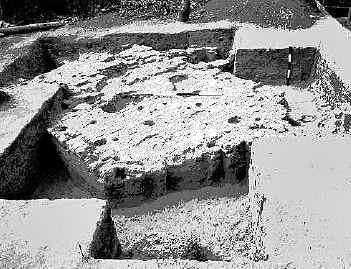
The Muziris Heritage Project is a novel attempt at the behest of the Department of Cultural Affairs, Govt of Kerala. It aims at retrieving the historical heritage of the Kodungallur-Paravur region and plans a combination of heritage management initiatives in its restoration, conservation and access to the public. KCHR, identified as the nodal agency for Muziris Heritage Project provides academic guidance and undertakes archaeological / historical research in the region. KCHR Chairman Dr. K.N.Panikkar submitted a concept note on Muziris Heritage Project pointing out the possibilities and potential of the proposal. (( KCHR Project Details- The Muziris Heritage Project http://www.keralahistory.ac.in/researchprojects.htm ))
Pattanam Excavations 2007
The Pattanam excavations was the first ever multi- disciplinary excavation undertaken in Kerala State. The first part of the project was a surface survey for archaeological and historical evidence in the region. This was followed by extensive excavations at the early historic urban site of Pattanam. Pattanam is located in Chittatukara Panchayat -Vadakkekkara village, lying between Kodungallur and North Paravur in the Periyar Delta in Ernakulam district, Kerala. The main objective of the excavation was to search for archaeological evidence that would help to locate/identify an early historic urban settlement and the ancient Indo-Roman port of Muziris or Musiri on the Malabar Coast. The excavation was carried out from 18th February to 8th April 2007 in collaboration with A.S.I, State Department of Archaeology and Tourism and Revenue Department. Dr. P J. Cherian who was awarded license by the ASI was the Director and Dr. V. Selvakumar and Dr. K.P. Shajan the Co – Directors of the Pattanam Excavations.
The site at Pattanam covers approximately 1.5 sq. km and the core area measures about 600 x 400 m. The north-eastern part of the site was chosen for excavation based on the surface exploration undertaken earlier. Four Trenches (PT 07 I ,PT 07 II, PT 07 III, PT 07 IV) and one trial trench (PTT 07 I) covering an area of 125 sq. m. was systematically excavated. The “locus methodology” adopted for this excavation distinguished each layer/feature/pit/structure/ activity area on the basis of colour, texture and composition.
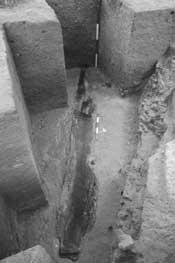
Many important finds were obtained like human bones, storage jars, a gold ornament, glass beads, stone beads, utilitarian objects made of stone, copper and iron, typical pottery, early Chera coins, brick wall, brick platform, ring well, wharf with bollards, and a six meter long wooden canoe parallel to the wharf structure about 2.5 m. below surface level. The structures indicate a vast ‘urban’ settlement. The excavations suggest that the site was first occupied by the indigenous “Megalithic” (Iron Age) people, followed by the Roman contact in the Early Historic Period. It appears that, the site was continuously occupied at least from the 2nd.century BC to the 10th century AD. The maritime contacts of this region during the Early Historic period seem to have been extensive as evidenced by the large number of Roman amphora sherds, a few terra sigillata sherds, Sassanian, Yemenite and other West Asian potteries. Proliferation of rouletted ware probably made in the Bengal-Gangetic region signifies the site’s importance in the pan Indian context as well.
Experts from various disciplines such as geo- archaeology, archaeo-zoology, palaeo-botany, archaeo-chemistry and physics, underwater archaeology, metallurgy and institutions such as Southern Naval Command Kochi, ISRO Bangalore, Deccan College Pune, National Geo- physical Research Institute Hyderabad, Institute of Physics Bhubaneswar, MS University Baroda, NRLC Lucknow, Kerala Forest Research Institute Trissur and Centre for Earth Science Studies Thiruvananthapuram, extends technical support. (( KCHR Project Details, Pattanam Excavations 2007-http://www.keralahistory.ac.in/researchprojects.htm ))
The lure of pepper
When Alaric the Visigoth held the city of Rome to ransom in A.D. 408, he demanded and got five thousand pounds of gold, 30 thousand of silver; 4,000 silk tunics and three thousand pounds of pepper.
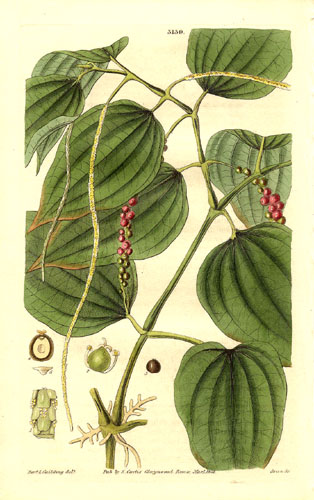
There are people in the spice trade who will tell you that Alaric wanted the pepper to put in his sausages–a recent invention of the Visigothic horsemen that enabled them to travel great distances with a relatively well-preserved supply of meat. But the early history of sausage is murky; it is more likely that Alaric wanted pepper because it was small in bulk, light in weight and enormously valuable. The Romans, like the Greeks before them, were wild about pepper, which they imported at great expense from the East. Pliny the Elder chided them for exchanging precious metal for a product that grew like a weed in its homeland. But they went on paying out their gold and silver. First they paid it to Arabian middlemen. When they learned that it grew in India, they discovered how to use the monsoon winds to sail regularly back and forth between the Red Sea ports and the Malabar coast, and it became one of their principal trade routes. An old Sanskrit text records how their traders “came with gold and returned with pepper… ((Men launched 1,000 ships in search of the dark condiment. (the lure of pepper)- : Smithsonian))
Earlier findings at Pattanam
In 1983, a large hoard of Roman coins was found at a site around six miles from Pattanam. So far many significant evidences has been obtained from the excavations.
Earlier the most important find was the rim and handle of a classic Italian wine amphora, which came from Naples and belonged to the late first century B.C. The amphora, which was used to transport wine and olive oil, had been identified from a number of Roman sites in India, including Arikamedu and Alagankulam in Tamil Nadu.

The etymological evidence provide support to the theory that Pattanam was a commercially important place located near the Periyar. It has been mentioned in many literary works that Muziris was located near the Periyar. The settlement records of Pattanam show that the entire area was occupied by trading communities, ranging from Arabs, Jews and Chettis. A team of archaeologists has unearthed a wharf with dugout canoe, Roman pottery, West Asian ceramics, beads made of semi-precious stones and brick structures. Multidisciplinary research Experts in archaeo-zoology, palaeobotany, archaeo-chemistry and physics, underwater archaeology and metallurgy, and from State and national level research institutions are involved in the excavations, which have thrown up enough indications that the site was first occupied by the indigenous megalithic (Iron Age) people. This was followed by Roman contact in the Early Historic Phase. The locality appears to have been occupied in the early medieval period, which implies continuous habitation of the area from 2nd BC to 10th Century AD.
Pattanam, near North Paravur, on the opposite side of Kodungallur across the river came once again to the limelight a couple of years ago when pieces of pottery, beads, coins and bottles were unearthed, giving the first indication that the place could really be the ancient trading port of Muziris, which was the link between Rome and India 2000 years ago. And now a wooden piece that formed part of an ancient boat and a quey have been unearthed, recalling to one’s mind the descriptions in the first century (ca.) Sangham works and Roman writers how the western ships anchored at a distance from the Muziris emporium (Primum Empoium Indiae-Pliny) and boats dug out of a single piece of timber carried huge quantities of Roman Coins to Muziris, along with other commodities.
The study at five trenches covering an area of 120 sq m in the North-eastern part of Pattanam located between Kodungallor and North Paravur was recently carried out by the Kerala Council for Historical Research (KCHR). In one of the trenches that were dug in the area last week, the foundation of an early historic structure, pieces of Roman amphora and Rowlletted wares were excavated. In yet another trench, a terracotta ring-well and early historic bricks, which are believed to date back to the Early Chera period (Indo Roman trade period), were excavated. The well was found at a depth of 1 metre and extended up to 2.5 metres. The find proves that the area was once an urban habitat site with some Roman contacts, claimed the archaeologists.
A team of historians and archaeologists including the Vice Chancellor of the Sree Sankaracharya University of Sanskrit, K. N. Panikker, the Director of the School of Letters (M.G. University), Rajan Gurukkal, the Director of the Kerala Council for Historical Research, P.J. Cherian, the Professors of Archaeology of Thanjavur University, V. Subbarayalu and K. Rajan, and the former professor of Archaeology of Jawahar Lal Nehru University, New Delhi, Sherin Ratnakar, visited the site .
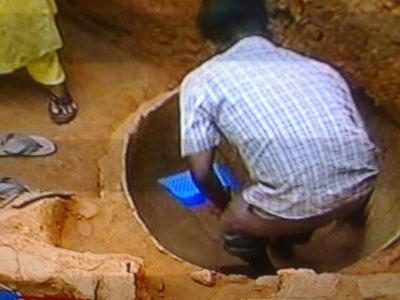
The well and structures were found on the land owned by Rajappan of Krishna Nivas at PattanamThe project undertaken as part of Kerala government’s “Muziris Heritage Project” also had collaborative support from the Archaeological Survey of India, State Archaeology, Tourism and Revenue Departments.
The excavations have given clear indications that the site was first occupied by the indigenous megalithic (iron age) people. This was followed by the roman contact in the early historic phase.Radiocarbon dating results were awaited for confirmation.”We have to wait for further analysis to discern the context that brought western contacts to this place.
It is probable that these contacts started during the iron age-megalithic transition phase,” according to KCHR director P J Cherian.The locality also appears to have been occupied in the early medieval period, which implies continuous habitation of the area from second century Bc to 10th century Ad.
A wharf with dug-out canoe, Roman pottery, West Asian ceramics, beads made of semi-precious stones and brick structures found at the site also indicated the rich maritime heritage of the Malabar coast, he said.Cherian said the maritime contacts of this region during the early historic period, proved by the large number of Roman amphora shreds, Yemenite and other West Asian pottery, seem to be fairly extensive.
The stone beads, brick architecture, triple-grooved roof tiles, ring well, iron nails pointed towards a more urban character of the site. The habitation at Pattanam seems to have continued into the early medieval period. The variation in brick architecture, the appearance of Islamic pottery and the profusion of glass beads were clear pointers, he said.From the evidence so far evinced, this site seems to have remained unoccupied between the 10th and 18th centuries.
If this can be confirmed, it may provide greater insight into the geological and regional history of the area, he said.Human bones, brick wall, storage jars, coins, ring well, and canoes were the important findings.Referring to the human bones, he said this was an unusual find in Kerala context where such evidences were lost either due to the then mortuary practices or the poor preserving condition of the moist and acidic soil.Efforts should be made to protect the archaeological site, which even has the potential to be included in the World Heritage map, he said.
The present archaeological research undertaken by KCHR would be extended offshore and to other nearby water bodies.The under-water explorations would be carried out with the support of the Southern Naval Command,Kochi.
Study points to ancient trade connection in Central Travancore
A team from the Department of Archaeology, University of Kerala, that undertook surface exploration studies in the Central Travancore region of Kerala claims to have stumbled upon what could well be Nelcynda, a trade emporium of ancient Kerala.
The finds have brought to the fore hypotheses about maritime trade between ancient Rome and Kerala and a sea port that was “preferred” by Roman seafarers to that of famed Kodungalloor. The 16-member team led by the Head of the Department, Ajit Kumar, found a piece of the handle of what was possibly a Roman amphora — a vessel used at the turn of the first millennium to carry wine and olive oil — from the Alumthuruthu-Kadapra area on the banks of the river Pampa. Pottery shards of local origin were also found during the exploration done in December 2007.
“Till now evidence of trade between ancient Rome and Kerala was confined to references in historical books and to finds of Roman coins. Pattanam near Paravoor recently yielded Roman pottery. Now we have found evidence that points to the possibility that the ancient trade port of Nelcynda was located in what is today Alumthuruthu-Kadapra near Chengannur,” Dr. Ajit Kumar said.
The amphora handle is seen to conform to references to Nelcynda in ancient books. The earliest reference to Nelcynda is perhaps in the book The Periplus of the Etuthraean Sea (Periplus Maris Erythraeai) authored by an unknown seafarer who navigated the west coast of India during the first century A.D. Periplus states that Nelcynda is 500 ‘stadia’ (about 92 km) from Muziris (Kodungalloor) by sea and by river and is 120stadia (about 22 km) from Bacare (Porakkad) along the mouth of the same river.
“Pliny the Elder in his book Naturalis Historia calls the port Neacyndi. Pliny also states that Bacare near Nelcynda was preferred to the one at Muziris as the latter was infested with pirates and because the roadhead was far from the sea. Claudius Ptolemy, the Alexandrian geographer, in his book Geographia dated to the second century A.D. calls this port Melkynda. It was also known variously as Nincylda and Nikinna. Early books say the port was part of the territory ruled by the Pandyas of Madurai,” Dr. Ajit Kumar explained.
Periplus says large ships came into Nelcynda bearing thin fabric, linen, corak, crude glass, copper, corn, wine and coins, largely from Rome. Exports from Nelcynda included pepper, pearls, ivory, silk, diamonds and sapphire. It is believed that at this point the coastline was further along the eastern side of the present Vembanad lake. Consequently Nelcynda was approachable by sea and river. The name could have its roots in ne l (paddy) and ‘cynda’ or ‘candam’ (field).
The area west of Alumthuruthu is called Kadapra, which could have meant a beach. There is a boat jetty called Thomakkadavu now located on a defunct channel of the Pamba; a place where the apostle Thomas is believed by some to have set foot. This, argues, Dr. Ajit, could mean that this area was connected by waterways of the Pamba. An area east of Alumthuruthu is called Nakkada — which could have originated from ‘Nelcynda.’ To the east of Alumthuruthu is Pandanad, on the Pamba.
Other experts who were consulted, however, felt that extensive surface studies and surveys are needed before it could be concluded that the site indeed is Nelcynda. They said the finds are significant. (( The Hindu dated 18/01/2008-http://www.hindu.com/2008/01/18/stories/2008011854822200.htm, http://www.hindu.com/2007/05/21/stories/2007052100830200.htm))
Radiocarbon dating from Pattanam aids understanding of Iron Age chronology
Kerala, or what later came to comprise it, may have had maritime contacts with far off lands as far back in time as 500 BC or even earlier, archaeological studies now suggest.
The Kerala Council for Historical Research (KCHR), which last year conducted archaeological explorations at Pattanam, 7 kilometres south of Kodungallur in Ernakulam district, says scientific analyses of material collected from the area have shown the maritime activity there to be as old as 500 BC “The artefacts recovered from the excavation site suggest that Pattanam, with a hinterland port and a multicultural settlement, may have had links with the Mediterranean, the Red Sea, the Arabian Sea and the South China Sea rims since the Early Historic Period of South India,” said P. J. Cherian, Director, KCHR.
The KCHR undertook the excavations in February-April 2007 and sent five samples to the Institute of Physics (IoP), Bhubaneswar. These were charcoal samples from the Iron Age layer and parts of a wooden canoe and bollards (stakes used to secure canoes and boats) recovered from a waterlogged context at the site. As determined through analysis using Accelerator Mass Spectrometry (AMS) radiocarbon (14 C), their mean calendar dates fall around 500 BC, with a span of uncertainty of less than a century, Dr. Cherian said.
According to him, it is for the first time that 14C AMS analysis was done for an archaeological site in Kerala. This dating, he said, was crucial to understanding the cultural sequence of the site which was active since the Iron Age.
The project was undertaken by the KCHR as part of the Muziris Heritage Project of the Kerala Government with technical assistance from a dozen national-level scientific institutes and laboratories. The organic samples have been sent to the National Geophysical Research Institute (NGRI), Hyderabad, for analysis employing conventional or radiometric method of 14C dating, he said.
T. Satyamurthy, former Superintending Archaeologist, Archaeological Survey of India (ASI), told The Hindu over the phone from Chennai that the Pattanam findings were quite encouraging.
He, however, called for more horizontal excavations with the involvement of experts to further validate the initial findings.
More samples establishing the antiquity of the site and activities there are called for to come to firm conclusions about the findings. This would call for excavations on a larger scale, he said.
Dr. Cherian said Pattanam is the first habitation site of the Iron Age unearthed in Kerala. Since previous enquiries were confined to megalithic burials, no firm dates were available for the Iron Age, except in a few instances such as Mangadu (circa 1000 BC) and Kunnoni. The radiocarbon dating from Pattanam will aid in understanding the Iron Age chronology of Kerala. The 14C ages of the charcoal samples from the lower-most sand deposits in the trenches at Pattanam suggest that their calibrated date range (14C ages adjusted for past fluctuations of 14C in the environment) is from 1300 BC to 200 BC and 2500 BC to 100 AD, respectively. The range, Dr. Cherian said, has been kept wide enough so that the probability of accuracy will be 95 per cent. This suggests that Pattanam witnessed the Iron Age occupation during the first half of the first millennium BC. Indigenous people seem to have settled in the area during the Iron Age w hen it was covered by beach sand. The occupation must have been sparse as evidenced by mostly black-and-red ware and other typical ‘megalithic’ pottery recovered from the more than 60-cm thick sand deposits in the locality, he added.
Canoe, bollard samples
The other samples analysed by the IoP were parts of a canoe and bollards belonging to a fascinating hinterland port with wharf-like features. The wood was identified as Artocarpus hirsutus Lamk. (wild jack or ‘anjily’) and Tectona grandis (teak) by the Kerala Forest Research Institute, Thrissur. The 14C date range of the canoe sample is 1300 BC to 100 BC, (that is, 700 plus or minus 600 BC with 95 per cent probability). For the two bollard samples, the 14C date range is 800 BC to 200 BC (500 plus or minus 300 BC, with 95 per cent probability) and 1100 BC to 1300 AD, ( A.D. 100 plus or minus 1200 with 95 per cent probability), respectively.
Dr. Cherian said the 14C AMS dates suggest that the Pattanam canoe can be the earliest known canoe in India. The other evidence of an early boat discovered from the waterlogged deposit at Thaikkal near Cherthala in Alappuzha district two years ago was dated to AD 13th-14th centuries. The error weighted mean for all five samples analysed is 500 plus or minus 80 BC. Corroborative analysis in relation to the other artefacts recovered is necessary for a clearer picture of the chronology of the site.
The team

The AMS analysis was undertaken by scientists of the AMS Radiocarbon Laboratory of the IoP, led by Dr. G.V. Ravi Prasad and Dr. Koushik Dutta. The KCHR team was led by, apart from Dr. Cherian, V. Selvakumar (Tamil University, Thanjavur) and K.P. Shajan.
The ASI has granted a licence to the KCHR for a second excavation and the work is set to begin in February. Besides the excavation at Pattanam, the licence will enable the KCHR to explore within 50 km of Kodungallur. Underwater exploration in waterbodies in a 20-km radius is also included.
The project, to be undertaken in collaboration with the Southern Naval Command of the Indian Navy and the State Archaeology Department, will have Professor K. Rajan (Pondicherry University), Dr. Selvakumar and Dr. Shajan as co-directors.
C. Gouridasan Nair ((The Hindu dated 09/01/2008-((http://www.thehindu.com/2008/01/09/stories/2008010956451300.htm))
interesting compilation.i am sure who ever visits this site will become a frequent visitor and will get interested in tradition.
Pattanam, a sleepy hamlet on the banks of the river Periyar does not show up on the map of central Kerala, but there is evidence now that this tiny village once had maritime contacts with far-off lands in the 1st century A.D. Research, done in February-March 2007, reveals that this village, 25 km north of Kochi, was a busy, international hinterland port town and had an Indo-Roman settlement.
The recovered artefacts hint at Pattanam having an urban habitation since the Iron Age dating to 1500 B.C. Accelerator Mass Spectrometry radio carbon analysis done by Bhubaneswar’s Institute of Physics of the charcoal samples, remnants of a wooden canoe and bollard has established the town’s pre-historic antiquity.
Besides the sand layers and megalithic pottery, excavated material includes pieces of Roman amphora (wine jar), rouletted ware, Parthian-Sassanian pottery, West Asian ceramics, glass beads, semi-precious stones, chera copper coins and Roman golden rings dating between 1st century B.C. and 5th century A.D.
http://indiatoday.digitaltoday.in/iron-man-s-country.html
Pattanam has close similarity to Arikamedu site
Tuesday,14 October 2008 13:0 hrs IST
Thiruvananthapuram: Pattanam Roman pottery sherds on the western coast of India near Kodungallur have close resemblance to Arikamedu sherds from the Coromandel coast near Puducherry, Dr Roberta Tomber of Department of Conservation and Scientific Research, British Musesum, London, said today.
Talking on ”Indo-Roman Trade: Pattanam, Pots and Pepper” at the Kerala Council of Historical Research (KCHR) History Colloquium here, she said the major type of Pattanam as well as Arikamedu belongs to Dressel 2-4 variety of wine amphoras of the late 1st century BC to AD 1.
Since Pattanam was located strategically in the heart of the pepper growing area it was ideally placed for the export of black pepper to the West, she said.
Pepper finds from Egyptian Red Sea sites illustrate the huge quantities of pepper that travelled in the Roman period. Pattanam provides a window to trade relations between the Mediterranean and the Malabar coast, she added.
The amphora sherds form the most robust markers of the return journey of Roman traders to India.
Dr Roberta was at KCHR as a collaborating scientist of the Muziris Heritage Project.
Manorama News
Interested in findings on cultural and business relations with Ancient Syria and Pattanam.
The various house names ( name given to land owned by individuals/ families) suggests that there existed a Kingdom at Pattanam. For example, Edam ( Edathil) is the place were the King / land lords used to live. There is ” Pariyaram” which could be “Parivaram”, a place were the Kings men used to live. There is a “Kazhuppuram”, “Kallrakkal”, “Padamadham” and so many house names which indicates that the place Pattanam was really a “Pattanam” .
im very much intrested to join this escavation to find this city wich had sinked in mud. its seems like buddism had spread to these areas during the time the city existed. becoz many of the things taken from deep soil in these areas [kerala,thamilnadu] proves buddist belief existed here. like ‘nannangaadi’, ‘thoppikkallu…..etc
The initiative of Thomas Issac, Gopi, Selvakumar, Shajan, Cherian and others connected with the Govt. of Kerala and archaeological depts.and undertakings with regard to the Muziris Project is truly commendable.Earlier enterprises involving Raman, induchoodan, etc. had come to nothing. In this connection the efforts and work done by Prof. Menachery from at least 1971 onwards and his definitive book on the antiquity and 1st century BCE/ACE trade relations with and exhaustive missionary literature spanning two millennia on Muchri or Muziris or the vicinity of Parur-Kodungallur has finally borne fruit. The writings of modern as well as ancient scholars are finding 20th century and third millennium proofs because of the excavations at and studies on Pashnam or Pattanam. May I commend the site on ancient Muziris to your attention:www.indianchristianity.com – BOOKS page::Kodungallur
interesting article. now i know the importance of pattanam village.
Hi,
The Magnes Museum of California has just released a film clip of Jewish life on Synagogue Lane, Mattancherry, in the early 20th century. The 16 mm film was shot by anthropologist David Mandelbaum who was in Cochin in 1937.
Watch it here:
http://jewsofcochin.blogspot.ca/2013/08/magnes-releases-mandelbaum-film-clip-on.html