SRITE- Project for Preserving the Manuscripts of the Syrian Christians in India

Kerala is home for many thousands of Syriac, Malayalam, Malayanma, Kolezhuttu, Vattezhuttu manuscripts of older and more recent date belonging to the autochthonous communities of the St Thomas Christians. Because of the humid, tropical climate and other factors, these manuscripts are greatly endangered. SRITE is a complex international project, based on cooperation between Indian, German, Hungarian and American institutions, which aims at saving these manuscripts both in their content and in their physical reality. 
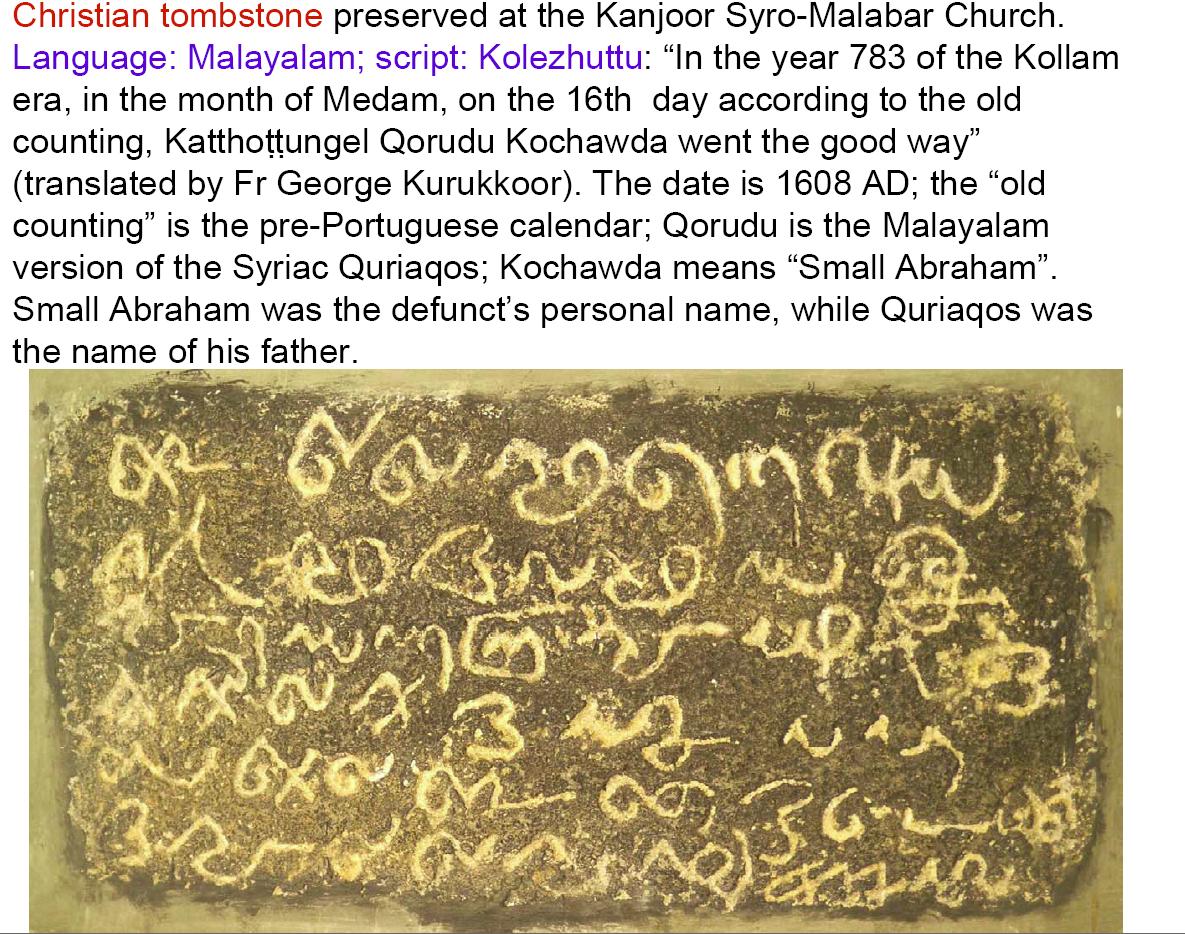
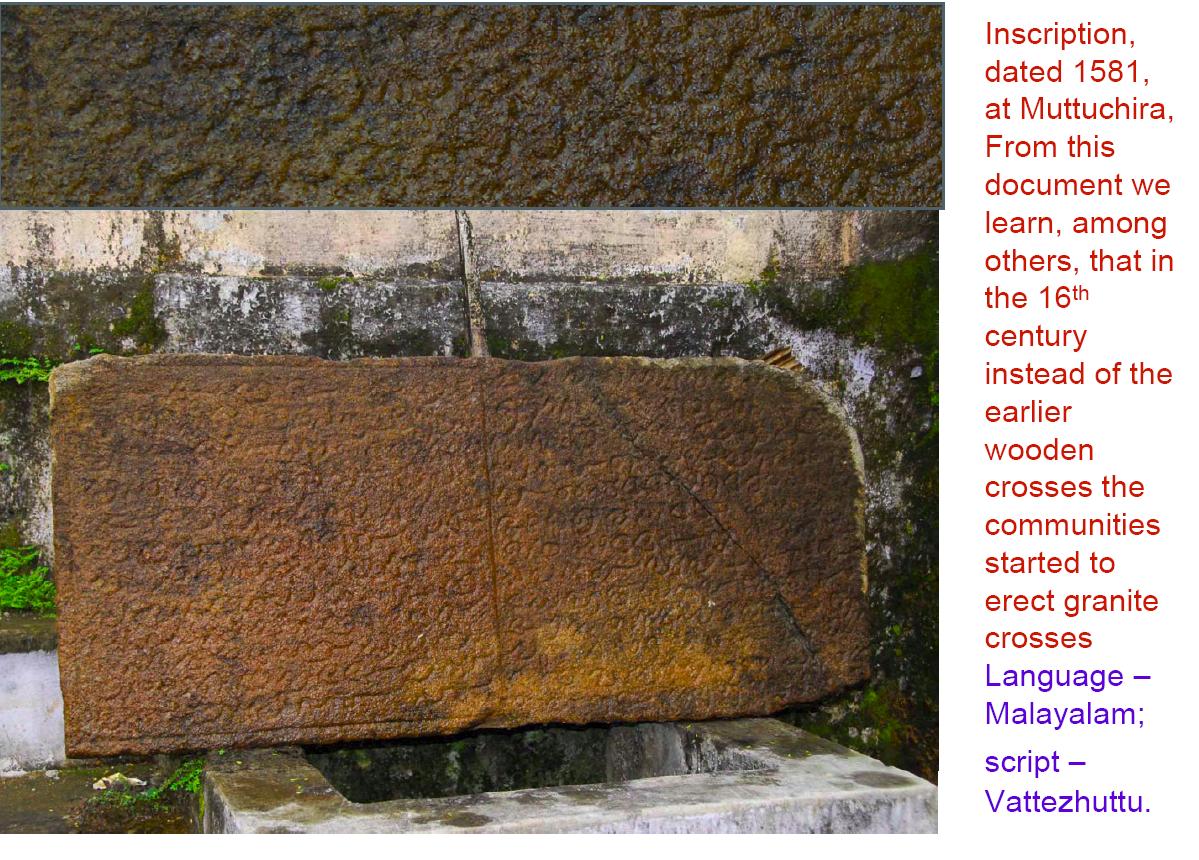
SRITE project is aimed in preserving the thousands Syriac, Malayalam, Malayanma, Kolezhuttu, Vattezhuttu manuscripts of older and more recent date. The project estimate is to cover over 1,000 heavily endangered Syriac manuscripts in Kerala. The key difference of this project is unrestricted “open access policy” that is, they will make the entire digitised material freely available via the internet, provided with the appropriate catalogue descriptions. At the same time, the benefits resulting from the publications are returned to the proprietors, on the condition that they spend the proceeds on the conservation of the original manuscripts, in their physical reality.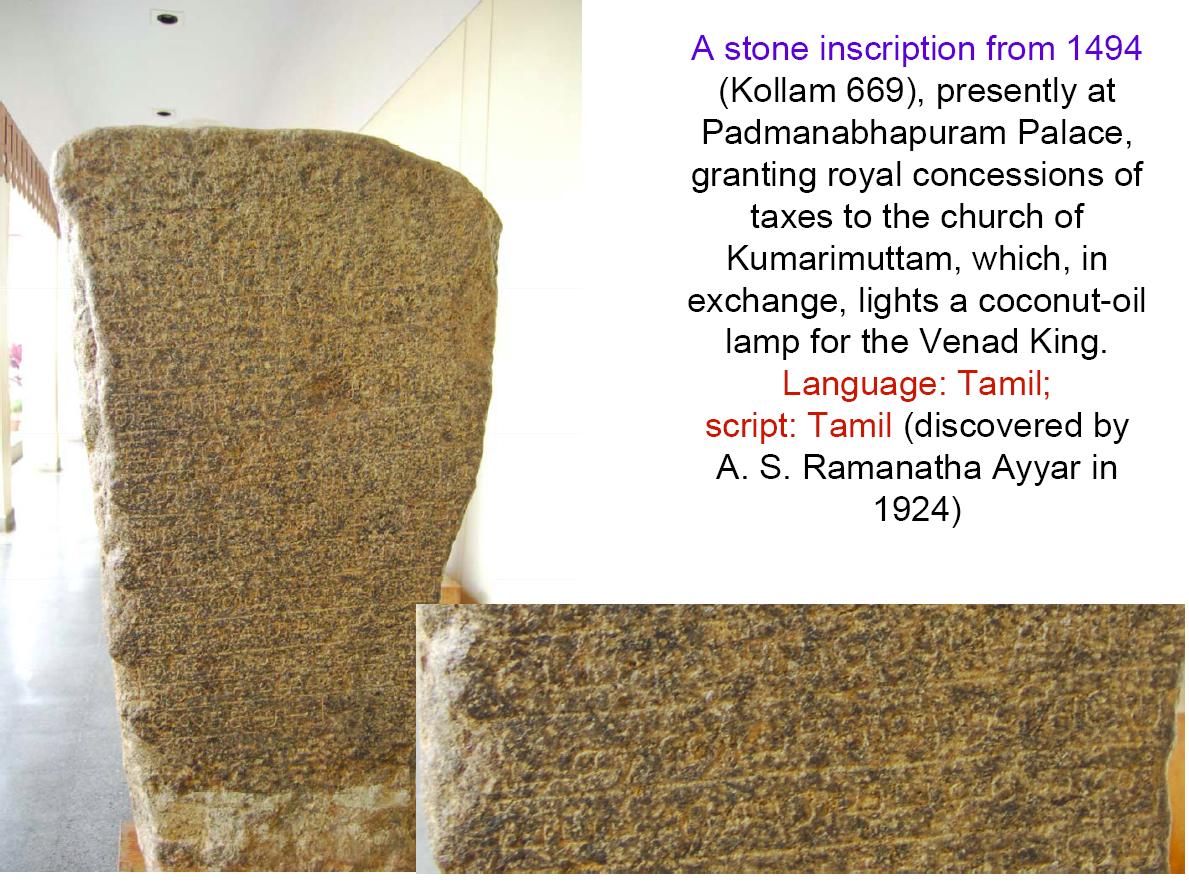
The collections are mixed; they contain Syriac, Malayalam and pre-Malayalam material, the whole belonging together. The manuscripts are written on paper or palm leaves. Besides manuscripts proper, we also have a rich collection of archival material in Syriac: documents pertaining to the relations of the Syrian Christians of India with their mother Churches in the Middle East, such as letters sent to and fro, official documents issued by Middle Eastern hierarchs, etc.
Some of these are available in the original, others in copies, often in letter books. This documentation begins in the early seventeenth century and ends in the twentieth century. The manuscripts proper often contain new texts, unknown from elsewhere. This material, once collected and processed, will permit us to write the hitherto unknown history of indigenous Christianity in southern India.
Project website
SRITE
Project Team
Head of the Project in Tübingen: Prof. Dr. Stephen Gerö, Orientalisches Seminar
Head of the Project in Budapest: Dr. István Perczel, CEU Center for Hellenic Traditions
Technical Director and IT Manager of the project: Attila Baticz
Technical Associate in India: Yesudas John Chovokkaran
Website Manager: Tivadar Feczko
The digital library
Presentation about the Project
Please check this link for the presentation titled History of Kerala Christianity on the Basis of Newly Found Documents: Methodological Challenges and Possible Answers by István Perczel.
Brief overview of the collection
- Konat collection: The library of the Konat family in Pampakuda (Malankara Indian Orthodox Church)
- Koonamackal collection: Private manuscript collection of the Koonamackal priestly family (Syro-Malabar Church)
- Kuruvilassery: The library of the CMI (Carmelites of Mary Immaculate) Fathers at Kuruvilassery, Thrissur (Syro-Malabar Church)
- Mangalapuzha: St. Joseph’s Pontifical Seminary, Mangalapuzha, Alwaye (Syro-Malabar Church)
- Manjinikara St. Ignatious Dayro, Manjinikara Pathanamthitta (Syrian Orthodox Church, Antiochian Patriarchate)
- Mannanam: The library of the CMI Monastery of St. Joseph, Mannanam, Kottayam (Syro-Malabar Church)
- Mar Aprem collection: The library of the Metropolitan’s Palace, Thrissur (Church of the East)
- Mar Thoma Seminary: The Mar Thoma Seminary, Kottayam (Mar Thoma Church)
- Nidhiri collection: Private manuscript collection of the Nidhiri priestly family
- Pulatheen: Metropolitan Palace, Pulatheen, Tiruvalla (Mar Thoma Church)
- Vadavatthur: Saint Thomas Apostolic Seminary, Vadavatthur, Kottayam (Syro-Malabar Church)
- OTS: The library of the Old Seminary, Kottayam (Malankara Indian Orthodox Church)
- SEERI: The library of the Saint Ephrem Ecumenical Research Institute in Kottayam, formerly the collection of the Malankara Catholic Bishop’s House in Tiruvalla (Syro-Malankara Church)
- Thozhiyur: The library of the Metropolitan’s Palace, Thozhiyur (Malabar Independent Syrian Orthodox Church)
- Trivandrum: The library of the Archbishop of Trivandrum (Syro-Malankara Church)
Institutions Involved in the Project
1. Saint Ephrem Ecumenical Research Institute (SEERI) in Kottayam, Kerala
2. Oriental Institute (Orientalisches Seminar),Eberhard Karls University, Tübingen, Germany
3. Center for Hellenic Traditions,Central European University,Budapest, Hungary
4. Beth Mardutho: The Syriac Institute, Piscataway, New Jersey, USA
5. German Research Foundation, (Deutsche Forschungsgemeinschaft)
6. Central European University, Budapest
7. Dumbarton Oaks (Trustees of Harvard University)
8. Rafael Chodos and Junko Chodos,Claremont, California
9. Professor David Beecher Evans, Fresh Meadows,NY-Bibbiena, Italy
Snippets from Collection
Among these one finds a copy of the East Syriac Nomocanon by Abdisho of Soba, copied in 1563 explicitly for Mar Abraham, the last Chaldean Metropolitan of the Malabar Church, the personal Pentateuch – written in East Syriac characters – of the great Syrian Orthodox prelate, Mar Thoma VI (Mor Dionysius I, the Great: 1765-1809) and many Chaldean books, including ones copied in Iraq in the time of Patriarch Mar Joseph Audo VI. It also contains a copper plate document in Vattezhuttu (”Round script”) script, the one used between the twelfth and the early nineteenth century for inscriptions and legal documents. This one registers an eighteenth-century land donation to a church. There are a number of palm leaves written in Malayalam, documenting legal and economic issues connected to the churches, palm-leaf manuscripts in Sanskrit and a Christian Tamil paper manuscript, perhaps from the eighteenth century. Perhaps the most interesting document of the entire collection is a palm-leaf manuscript containing eighteen Christian apocrypha written in Malayalam, among others the Acts of Thomas.

The collection reflects all the stages of this history, beginning with a liturgical book (Kashkol) written in 1594 and commemorating Mar Abraham, the last Chaldean Metropolitan of the Church before the forced Latinisation, and ending with the diaries of Mar Thoma Dharmo. Among others, it contains manuscripts dated to the thirteenth and fourteenth centuries. Earlier checklist by Metropolitan Mar Aprem. The collection also contains a number of rare prints and thousands of palm leaves with diverse content
________________________________________________________________________________
Many thanks to John Mathew for the link for “History of Kerala Christianity on the Basis of Newly Found Documents: Methodological Challenges and Possible Answers” by István Perczel
All the pictures above are from the presentation. Please check the presentation for details.
________________________________________________________________________________
hats off to you
Great news and thanks for keeping informed sad to see that no chruches are invloved other than management quota and street fighting have they done any goodlot to learn from you.
Am a regular reader on this forum.very impressed by you peoples work.I would also like to contribute and do my part.
Good initiate.
Jasmine-Saint Ephrem Ecumenical Research Institute (SEERI) is Syro Malankara Catholic Church organisation.So you cannnot say that churches are not invloved.Constructive churches are always part of this kind of initiatives may be that it doesnot come to lime light often.
Good work.
The Hindu dated Sept 14th has a great read story about Prof. Istvan Perczel.
A Hungarian scholar of medieval Christianity is on a mission to preserve a slice of India’s Syrian Christian past.
“There is a remarkably rich heritage of Syriac in Kerala, particularly from the 15th to 19th centuries,” says Istvan Perczel, who teaches at the Central European University, Budapest. Enchanted by this heritage, he has been digitising Syriac documents, correspondence and religious writings. “Syriac thrived in Kerala even while this sacred language was fading away from its place of birth,” Prof. Perczel notes.
http://www.hindu.com/mag/2008/09/14/stories/2008091450170500.htm
There is a coverage of this on PBS, PBS.org
The west doesn’t know about Indian Christianity as they know about Hindus or Sikhs.
I found a “kalvettu” (stone slab with pictures and incriptions, maybe “vattezhuth” ) in the tamil nadu govt museum, at Coimbatore. The interesting part is that there are two crosses on the top of the slab one on the left side and the other on the other. Looks like some kind of an order from the King?. The keeper don not know anything about the contents and do not know who can provide details.
The slab was retrieved from “pattanam” village near coimbatore, from where many historical artifacts where found. Even today people talk about “gold coins” hidden in these areas and comparatively the land prices here are very high.
If anybody is interested please contact me.
My email id is “[email protected]” and Ph no is “94868 05797”
I am proud of my heritage and look forward to the preservance of this valuable Syriac prapers and music