
‘The St. Thomas Christian Encyclopedia of India’- Volume I -Prof. George Menachery


Notes about the Editor
Prof. George Menachery is a freelance Indian Journalist and Editor of the St. Thomas Christian Encyclopedia of India and the Indian Church History Classics. After teaching university classes for thirty years, he gave up the job as Head of the Department of Post-Graduate Teaching in order to concentrate on research and publication. SARAS (South Asia Research Assistance Services) provides information and research assistance for topics dealing with India in particular and South Asia in general. He has to his credit a large number of publications, research papers, articles, radio talks and TV programmes. His research activities and lectures have taken him to more than 20 countries in 4 continents.
St. Thomas Christian Encyclopedia of India Volume I
The St.Thomas Christian Encyclopedia of India is a reference work on India in general and on Indian Christianity in Particular. In addition to a wealth of statistical information and directory material, specialist essays have been contributed by hundreds of Archaeologists, Anthropologists, Artists, Historians, Educators, Biographers, Lexicographers and Researchers.
The Volume I focuses on Christianity in India in general. Following are the list of major articles in Volume I. There are also many minor articles and over 100 pictures.
Major Articles in Volume I
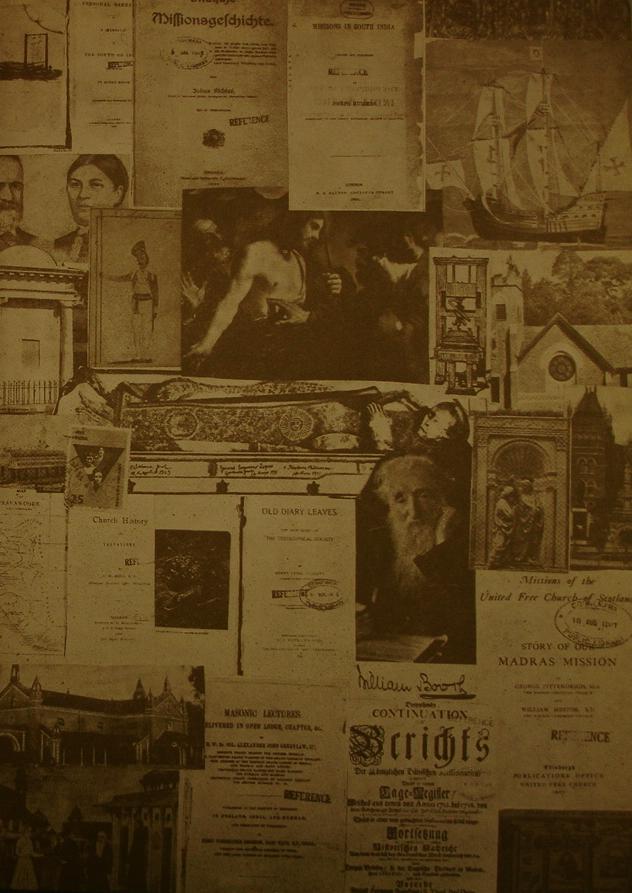
• Glimpses of India
• The People of India
• Origins of Christianity in India
• The First Centuries
• Armenians and other Eastern Christians in India across the centuries
• Outline of the History of Latin Rite Christianity in India
• Saint Francis Xavier
• The Portuguese Padroado in India
• Vicar Apostolic and missions under Padroado in 17th and 18th centuries
• The Indian Church 1659-1887 and the Vicariate of Malabar
• Christianity in Eighteenth Century India a Survey
• From Tranquebar to the Sepoy Mutiny
• The Church in India in the XIX and early XX centuries
• Protestant Christianity in India since 1858
• History of the Lutheran Churches in India
• The Baptists in India
• The Quakers or the Religious Society of Friends
• The Salvation Army in India
• The Mennonite Brethren Church of India
• The Pentecostal Churches of India
• The Church of South India
• History of the Church of North India
• Evangelical Missions in India a review
• Christianity and the Cultural World of North East India

• Evangelization in North East India
• Catholic Mission Work in Andhra Pradesh from 1500 to 1875
• Catholicism in Andhra Pradesh since 1875
• Protestant Missionary Work among the Telugus
• Church Growth and the Outcastes of Andhra
• The Canadian Baptist Mission and Social and National Awakening
• Contribution of the Basel Mission to the Socio Cultural Life of the West Coast
• The Christianization of Wynad
• The Chirakkal Pulaya Mission
• Christianity in Maharastra
• Christianity in Gujarat
• Christianity in Pakistan
• Christianity in Punjab
• Catholic efforts in Jammu and Kashmir
• Christianity in Himachal Pradesh
• Christianity in Bihar
• Christianity in Sikkim
• The Himalayas and Beyond
• West Bengal- Evangelization in the City of Calcutta
• Christianity in Bangladesh
• Christianity in Burma
• Catholic Efforts in Ceylon
• Protestant Efforts in Ceylon
• Hierarchy of Catholic Church
• The Apostolic Nunciatre in India
• The Catholic Bishops Conference of India
• The World Council of Churches
• The National Christian Council of India
• General Survey of Evangelization in India
• Evangelization in the Indian Context
• Formation for Evangelization among the Thomas Christians
• The Syro Malabar Church- Prospects for Evangelization
• The Catholic Malankara Church and Evangelization
• Culture at service of Evangelization in India
• Evangelizing Work of the Church in India- Evolution and Constraints
• Evangelization in the Context of Other Religions
• Communication of the Gospel in the Context of India’s struggle for a New Society
How to Get a Copy
The St. Thomas Christian Encyclopedia of India Volume I is priced at Rs. 1750 in India and US $95 abroad. This is published by South Asia Research Assistance Services ( SARAS). More details can be obtained from IndianChristianity.com. There is also an order form at the site.
Pictures
1. The Inside Cover of St. Thomas Christian Encyclopedia of India Volume I
2. Inner Cover page of St. Thomas Christian Encyclopedia of India Volume I
3. Mount Carmel Church at Allepy from St. Thomas Christian Encyclopedia of India Volume I
__________________________________________________________________________
Author can be reached on admin at nasrani dot net.
More details about the book available at SARAS.
__________________________________________________________________________
ELECTING A NEW POPE — The Vatican October 1978
Prof. George Menachery had read and written much about PAPAL ELECTIONS. When he went to Rome as a free lancer for the October 1978 election where the conclave of Cardinals chose the present Pontiff His Holiness Pope John Paul II, he had merely wanted to experience at first hand the joy and excitement of a papal election as described in classics he had read many times over such as Morris West’s ‘SHOES OF THE FISHERMAN’, Irving Stone’s ‘The Agony and the Ecstasy’, and Henry Morton Robinson’s ‘The Cardinal’. But his Roman holidays turned into a memorable adventure. Read about it here.
The Cardinals were arriving one by one for the ‘Mass for the Election of the Pope’. They entered the cobbled courtyard behind St.Peter’s Basilica in huge cars and walked towards the special back-door of the Basilica quite close to the main altar.After the Mass they would enter the Conclave (‘with key’) and proceed to elect behind locked doors the next spiritual leader of the crores-strong Catholic community of the world and the temporal head of the State of Vatican.
I was the only Indian among the 1300 press reporters from all over the world in Rome that October accredited by Archbishop Pancharoli’s Vatican Press Office.Of these 300 belonged to the English-speaking group. The Italian group was 320-strong, the French were 200 odd, and the Spanish/Portuguese 140. In addition there were more than 300 TV crewmembers. Apart from two or three selected TV teams only fourteen of the 1300 reporters who had arrived to report the papal elections were permitted to enter the Basilica for the function to report and to take exclusive photographs.
Vatican accreditation given to George Menachery by the Vatican Press Office
These were selected by lot during the briefing sessions and I was extremely lucky to get one of those fourteen coveted cards. Some well-known magazines and papers from the United States and France were willing to pay huge amounts for this card. In fact some of the fourteen photographers present now at the Basilica door represented the most famous magazines and newspapers of the world, having procured the cards from the original lucky winners paying quite hefty sums.
One of the very first to arrive to attend that crucial function before the all-important Conclave locked its doors against the outside world was Lawrence Cardinal Picachy of Calcutta. As he got down from the huge car on to the vast brick-paved yard and proceeded towards the Basilica my Minolta flashed twice or thrice. One or two other pressmen also photographed the Cardinal from India, I noticed with pleasure.
It was with a huge coterie of admirers and followers that Cardinal Siri arrived. So also Cardinal Benelli. Both were front-runners in the first ballots in the previous election and one of these two was expected to come out of the Conclave as the new Pope. Hence the photographers vied with each other in taking their pictures. I also took one each. But I was now mainly waiting for the arrival of Cardinal Parecattil of Ernakulam, ‘my Cardinal’. Then came Cardinal Rossi of Propaganda in the company of Archbishop Lourdusamy (now a Cardinal). They talked serious business for a while before the Cardinal entered the Basilica and Lourdusamy went back. I didn’t forget to snap the duo.
But now the sound of music from inside the Basilica was growing louder and louder. Like the Wedding-guest in Coleridge’s ‘Ancient Mariner’ I had to still reluctantly tarry waiting for my Cardinal to arrive. There was still no sign of his car. Most of my fellow photographers were preparing to enter the church to cover the Mass and the decisive guide-line speech to the Cardinals. It was then that I noticed a solitary figure in red approaching from the huge gateway. This Cardinal looked lonely, tired, and crestfallen, yet somehow upholding the dignity of a prince of the Church. He alone among all the Cardinals arrived on foot, walking hurriedly towards the Basilica. No camera aimed to take his picture coming as he was without benefit of admirers and supporters. One or two of the big-time photgraphers from the US were looking at this pitiable figure almost it seemed contemptously. “There are lots of unused frames in my Minolta. I need only a few more to cover Cardinal Parecattil. So why not snap him, whom nobody appears to care for?”, I thought. And so I took a photo of this lonely man. He raised his head in some surprise, and went in silently. Soon afterwards Cardinal Parecattil came from the gianicolo hospital where he was staying, smiled at me, and went in, the very last Cardinal to enter the Basilica.
With thousands I stood in the Piazza San Petro between the colossal columns of Bernini near his fountain and the huge obelisk in the Vatican looking at the thin pipe raising its head to the left of Michaelangelo’s mammoth dome from the famous fresco-adorned Sistine Chapel to see whether it would spit white smoke this time, fifty-six long hours and seven ballots after the Cardinals had been locked up inside to elect one, most probably from among themselves, as the new successor of St. Peter. Two days back I had the rarest of privileges to study the arrangements in the conclave area as the goddess of fortune had given me one of the sixty cards distributed by lot among the 1300 journalists to inspect the secrets of the Conclave . I was especially attracted to the pepper containers on the table of each cardinal who will be attending the Conclave. I told fellow journalists how two millennia back 100s of 1000s of gold coins minted by Caesar Augustus who forced pregnant Mary to travel all the way to Bethlehem, Tiberius Caesar the master of Pontius Pilate, and the ‘fiddling’ Nero had found their way into distant Kerala in exchange for Kerala’s pepper and pearls and how Alaric the Goth had asked for 3000 pounds of Indian pepper. as ransom to free the Senate Fathers of Rome. From the stoves arranged to burn straw and chemicals to produce the white and black smoke I put some coal pieces into my coat pocket as mementos of this historic visit to the Conclave area.
Now, standing in the St. Peter’s square or piazza I looked at the balcony of the Basilica to test my newly bought binoculars. Some days back I had gone up to the roof of the basilica to examine the marvels of its architecture. As a student and teacher of art and architecture this exercise has always given me immense pleasure. On this occasion however I had another motive also. I had always wanted to touch the thin white pipe that would inform the world the election or non-election of a Pope. So with the intention of touching the pipe I approached it. But many wooden barricades had been erected to prevent just such an attempt. While I proceeded towards the pipe disregarding the barricades I could see from the corner of my eye a policeman coming towards me to prevent my proceeding further. Pretending not to see the arm of the law coming nearer and nearer and now shouting something very loud, I walked quickly to the pipe and touched it. Turning around I saw the furious policeman who immediately caught hold of my arms. I innocently asked him in Malayalam what the matter was. He shouted again. I repeated my question in Malayalam again. Then in broken – very broken – English I told him I could not understand what he was saying. In despair he brought me out beyond the mobile barricades and pushed me in the direction of the staircase and shouted something like GOOOO! That was a week ago
Now I was standing in the square or piazza looking at the balcony of the Basilica and the Sistine roof. Suddenly the tip of the pipe began to spit white smoke. The crowd began a deafening non-stop shout “Bianca! Bianca!” It’s white, it’s white. “We Have a New Pope! We Have a New Pope!” Tens of thousands were soon concentrating their attention on the balcony where the new Pope’s name would be announced and where the Pope himself would eventually appear. But within twenty-four minutes of the election of the Pope Osservatore Romano the official organ of the Vatican came out at 6.43 p.m. carrying a half-page picture of the new Pope. I bought a copy from the boy selling the paper like hot cakes among the crowd to see who had been finally elected. To my surprise I saw the lonely hero of my photograph keenly looking at me from the front page. He was the new Pope. But I didn’t know until then the name or country of Karol Joseph Woyitila. Even when Cardinal Felici announced the name in sonorous Latin very few in the crowd could recognize it. Once again the Italian adage was proved true: “He who goes into the Conclave Pope comes out Cardinal” – and the last and very least became the first, a Polaco, a non-Italian in 400 years, that too from the underground of a communist country – from the fourth world, so to say – as had happened to Anthony Quinn as Kiril Cardinal Lakota in the Holywood version of The Shoes of the Fisherman.
The huge lamps of the Vatican Palace and the Propaganda College started to flood the St. Peter’s Square, together with the huge Roman moon lighting up the whole area and converting night into day. By this time the crowd had swelled to some two hundred thousand souls filling the whole square and the Via De La Conciliazione up to river Tiber. It was another half an hour before the Pope appeared on the balcony to give his blessing Urbi et Orbi – to the City and to the World. Before giving that Latin blessing he talked to the people in simple Italian – to their great delight and to the displeasure of the Curia officials. ‘Viva il Papa’ Long Live the Pope, the crowd shouted again and again. ‘ Polonnia! Polonnia!’ Poland, Poland. Bearing witness to the birth of a new era the bells in the four hundred churches of Rome began to ring, led by the eleven ton Kanchenone of the St. Peter’s Basilica.
Morning. When I came to see Cardinal Parecattil once again at the hospital Gianicolo where he used to stay when in Rome I showed him the pictures I had taken. Of himself, Lourdsamy, Picachy and the new Pope as they were arriving at the courtyard entrance of the basilica. He couldn’t believe that I had taken a picture of the Pope before the election, because nobody thought he would be elected.
It was in a way my visit to Cardinal Parecattil at Ernakulam to bid him bon voyage that was the occasion for my deciding to go to Rome. Bishop Sebastian Mankuzhikkary who knew the Cardinal’s affection for me jokingly said to me then, ‘Are you not going with the Cardinal to Rome?’ I replied, ‘ I will go if he takes me with him.’ Of course the picture of many cardinals during previous elections taking an assistant with them came to my mind – that was not possible now after Pope Paul the Sixth had forbidden the custom in his directions for the papal election. After the departure of the Cardinal to the airport on his way to Rome for the election I brooded over the possibility of going to Rome for the election. I had read up so much on the election for many, many years that my desire to be in Rome during an election had become something of an obsession with me. This was my last chance, I thought.
Fortunately for me the largest circulated daily of Kerala and India agreed to part finance my expenses and what is more to publish my reports from the Vatican – if in fact they reached India in time – chances for which were quite nonexistent in those days. When I told Bishop Kundukulam of Trichur and others the same day about my desire they all encouraged me very much in this matter. And so I arrived in Rome just two days after the Cardinal’s arrival, which itself was a miracle – what with visa regulations, reservation hitches and what not. He was very glad to see me there. I was able to meet him there often and learn about the discussions among the Cardinals about the forthcoming election. Cardinal Picachy and Archbishop Lourdusamy also talked to me often. It all helped me to send relevant reports to India.
After meeting every Cardinal individually and after meeting the heads and representatives of the various countries who had arrived to congratulate the new Pope His Holiness gave an audience to the Press on the eve of the “Coronation”, to which not only the 1300 journalists with Vatican’s accreditation but many more were invited. While waiting at the bottom of the Great Staircase leading to the hall in the Vatican Palace where the audience was to take place somebody who appeared to know me told me from behind to proceed. I didn’t know why I should try to go before the others. Any way I tried. But the two Swiss Guards stopped me with their extended spears. Picp& +caption Dejected, I climbed down the steps. Then somebody from the Oriental Congregation appeared from behind the Swiss Guards from near the audience hall and beckoned me. Though the guards protested at first finally they allowed me to go up, also possibly because they were amused at my timidity. When I entered the hall many seats were already taken by officials and so on. The bearded official from the Congregation was leading me in when a Rev. Sr. took me under her charge and led me to the benches. She sat at the aisle end of one bench. When I tried to take the seat by her side she asked me to take the seat behind her. At that time I took it as an insult. (My 1972 experiences of segregationist attitude in the New York Sub-Way were only too strong in my mind.) But she only smiled. She was the official on Radio Vatican who was in charge of all the Polish programmes, and as such was very familiar with the new Pope as he used to give many talks to his people in communist Poland over Radio Vatican. She was a close friend and room-mate or something of the Rev. Sister in charge of the Indian programmes and hence had seen me often at the Radio Station. That was why she took me under her charge. When the Pope finally came into the hall and was proceeding to the rostrum he looked in our direction, and seeing the Polish nun came towards us. He came and stood in front of us and began to talk to the Rev. Sr. Although the well-built ecclesiastic who was the Pope’s body guard tried to prevent it I shook hands with the Pontiff. The Sr. whispered to me, “Say something to the Pope, you may never get such a chance in your whole life.” I gathered all my courage, and in spite of the tough body guard’s piercing looks, asked the Pope:” Your predecessor Pope Paul the Sixth did not come to Kerala when he came to India, though there is an Apostolic Church there. Will Your Holiness visit Kerala?” I completed the question somehow. I do not know whether the Holy Father heard or understood me fully. But he replied in perfect English, “Why Not?” That was quite enough for me, and for the body-guard too I suppose because he whisked the Pope away towards the rostrum with all his might.
After that the next day’s Mass for the Commencement of the Ministry and “Coronation” – the term is no more used and the three tiered crown is no more seen – was not such a great treat though it was pleasant to watch the whole function on the steps of the Basilica’s facade from the vantage point of the balconies over the Bernini columns in the company of great journalists from the world over.
Why was Cardinal Woitila so late that day on which the Conclave began? Why was he so tired-looking? These questions troubled my mind often in the next several years whenever I looked at the rare Photo that I had published in some papers and at the Vatican accreditation card and all those other rare and wonderful press cards I was lucky to draw.
Then I went to Rome once again in 1985. I had an appointment with the chief of the Vatican Museums. I had persuaded him to allow me to take the photographs of the hundred odd statues of almost all the popular Hindu Gods and Goddesses that the ethnological museum possessed for my Indology volume (i.e. of the St. Thomas Christian Encyclopaedia of India). Such an exhaustive collection I hadn’t seen in India even. But when I arrived in the museum for the final sanction the director was absent. However he had made arrangements for me to meet his assistant Msgr. Pankowiski, who was from Poland. To curry favor with him I told him that I had organised much of the Malankara Golden Jubilee Exhibition at Kottayam in 1980 that was inaugurated by the Polish Cardinal Rubin, and a large picture of the Polish Cardinal had been displayed by us in the exhibition hall which is today the home of the St. Ephraem Ecumenical Research Institute. Then I told him jokingly that I was the only journalist who knew a Polaco would be elected to the Holy See, and I told him the story of the late-coming Cardinal Woitiva and my taking his photo. The asst. director jumped up from his seat and told me the following interesting story breathlessly gesticulating and standing all the time.
“Do you know why he was late that day?” I said I did not know. Then he said: “ You know he is a great devotee of the blessed Virgin Mary, like most of us Poles.”
That was quite true. Most Poles gift you pictures of our lady of Chestochowa, as the Rev. Sr. from radio Vatican had done when we met during the Papal audience for journalists.” Almost the whole weekend before the commencement of the Conclave ( the Msgr. continued) the cardinal was away at the Mountain Shrine of Mary at Mentorella, praying for the Church to get a Good Shepherd at the election. On the morning of the Conclave after the prayers he stood talking to a Polish monk there for a few minutes. So when he came to the valley climbing down two miles the only bus to Rome had already gone. Rome was far away and he had to reach Rome before the doors of the Conclave were locked. Then he got a bus but it broke down some thirty miles away from Rome. (Cardinal Woitiva travelled only by bus, and always wore only tattered old black clothes.) There was no other bus. As directed by a sympathetic villager he approached the driver of an unused bus who was on holiday and told him his plight. The driver felt pity for the Cardinal and took him to the Vatican, the Msgr. concluded. Now I understood why he was late that morning and also why he looked so tired and depressed. Only then did I understand the reason why the Pope soon after his election flew to Mentorella in a helicopter (not in a bus this time!) to venerate the little wooden statue of Mary there.
That journey was the prologue to the new Pope’s many journeys to destinations beyond the Vatican and Rome, even to the ends of the world.
Contact me if necessary: [email protected] or [email protected]
OR Browse: http://www.indianchristianity.com
My profile: http://www.indianchristianity.com/html/profile.htm
My parish: http://www.ollurchurch.com
My Church: http://www.smcim.org
Catholic Bishops’ Conference of India: http://www.cbci.org/
The Holy See: http://www.vatican.va/
You can now have FULL DETAILS on the St. Thomas Christian Encyclopaedia of india, now complete in 3 vols. at: http://www.indianchristianity.com/html/Brochure.pdf
Here are the current rates:
The St. Thomas Christian Encyclopaedia of India Ollur 680306
Price Vol. I Rs. 2400 Vol.II Rs. 2400 Vol.III Rs. 3600 Abroad: Each Vol. US $ 132.00
The Indian Church History Classics Vol. I: The Nazranies SARAS Ollur 680306 Rs.3600 US$ 165