
Glimpse from History-Gondophares, Roman and Venetian gold coins in India

Glimpse from History-Gondophares, Roman and Venetian gold coins in India : Foreign coins discovered from many sites in modern India are many and varied. This include the Persian and Greek coins discovered from North India ( modern Pakistan ) and the vast number of Roman coins from South India in Malabar coast highlighting the trade relations between Roman ports and the Indian ports in Malabar coast.
What is interesting from the numismatics is the attestation of the early literature confirming the mission of St. Thomas the Apostle in India. It also corroborates the trade relationship modern Kerala had in ancient times shedding lights on the origin of Nasranis.
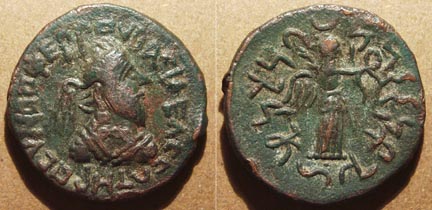
This article discuss about some of the coin found and the significance of numismatics with the mission of St. Thomas in India.
1. Gondophares coins
Gondophares is connected to St Thomas in early Christian traditions embodied in the Acts of Thomas. The Acts of Thomas describes St.Thomas embarking on a sea voyage to India, thus connecting Thomas to the west coast of India and his martyrdom with a king in South. Though the Acts are usually considered to be moral entertainments of a legendary nature, the Periplus of the Erythraean Sea is a surviving roughly contemporary guide to the routes commonly being used for navigating the Arabian Sea.
At the times the Acts were analysed, and until the discovery of his coins in the region of Kabul and the Punjab, there was no reason to suppose that a king named “Gondophares” had ever really existed.
Till 1834, questions on St. Thomas mission were around the historical figure King Gondophares. Did a king of the name of Gondophares reign over any portion of India? Was he a contemporary of the Apostolic age? Where was his kingdom situated? Was it practicable for the Apostle Thomas to have had access to it?

In 1854 General Alexander Cunningham, writing in the Journal of the Asiatic Society of Bengal (Vol.xxiii. pp.679-712), was able to say that in the preceding twenty years no less than thirty thousand coins bearing Greek and Indian legends, and extending over a period of more than three centuries, had been found in Afghanistan and the Punjab.
A large, if not the greater, number belong to Greek princes who ruled over the country as inheritors of and successors to the conquests of Alexander the Great. Another portion bear the evidence of Scythian conquerors, confirmed also by other authorities, and of Parthian kings and rulers who had become masters of these territories. The coins of Gondophares, the king with whom we are concerned, belong to the latter category.
Gondophares, is a Parthian king, who, during the middle of the first century a.d., ruled over Afghanistan and the borderland of India. The reign of Gondophares, is now an established archeological fact. The votive inscription of his 26th reginal year that was unknown until 1872. Now it is known that his regime commenced in 21 CE, so he was in fact reigning as late as 47 CE.
2. Roman Gold and Silver coins
The trade with Romans brought large number of golden coins to South India.
The Roman coins found abundant in Modern Kerala fall under three categories,
a) the pre-Augustan period b) the Imperial age of Augustus (23 BC to AD 14) to Nero c) the period beginning with the death of Nero ( AD 68) and ending with Caracalla ( AD 217).
Large numbers of Roman coins have been discovered on the Malabar coast (e.g. from Eyyal between Cranganore and Palayur, and from Kottayam in North Kerala). Few years back more than a thousand Roman gold coins were found buried in Parur, also not very distant from Cranganore where St. Thomas the Apostle is believed to have come at the beginning of the second half of the first century A.D. Majority of these coins belong to a period of some 80 years from Augustus to Nero (B.C. 27 to A.D. 68). ((Further details could be obtained from the records of the Archaeological Museum of Trichur, the Trichur Museum, the Trivandrum Museum and the Archeaeological publications of the erstwhile Cochin and Travancore States. The kerala Archaeological Department’s monograph “Early coins of Kerala” throws a good deal of light on the numismatic evidences for Kerala’s Roman connections. Also see Thomas P. J., Roman Trade Centres in Malabar, Kerala Society Papers, II, p. 260; and James Hough, The History of Christianity in India, I, p. 28.))
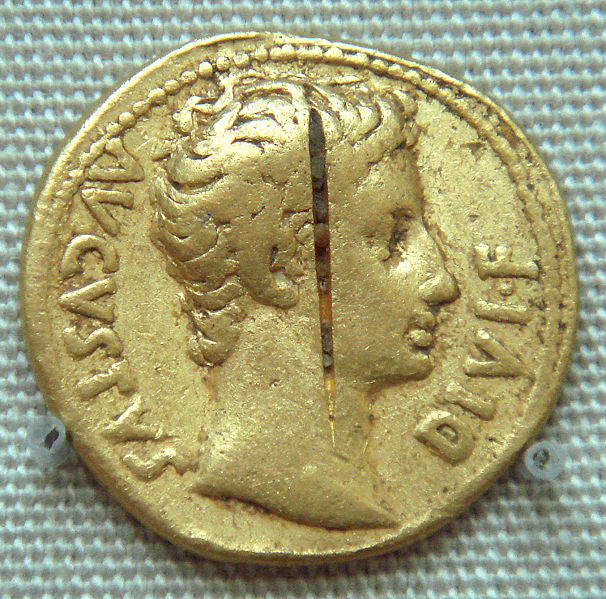 Muziris (Kodungallur) and Nelcyndis or Nelkanda (near Kollam) in South India, are mentioned as flourishing ports, in the writings of Pliny (23-79 AD). Pliny has given an accurate description of the route to India, the country of Cerebothra (the Cheras). Pliny has referred to the flourishing trade in spices, pearls, diamonds and silk between Rome and Southern India in the early centuries of the Christian era. Though the Cheras controlled Kodungallur port, Southern India belonged to the Pandyan Kingdom, that had sent embassies to the court of Augustus Caesar.
Sufficient archeological evidences have been discovered during the excavations in these ancient ports. Hoards of ancient Roman coins are being discovered through out Malabar coast in the last few centuries. A sharp cut acroos the face of Roman Emperor indicate that his sovereignty was not recognized but the coins were most welcome and accepted and exchanged in the soil with its own intrinsic value.
In 1847 a most fascinating discovery of Roman coins was reported from Kottayam near Kannur (British Malabar) another evidence for the existence of a great deal of trade between Kerala and the west in the first centuries B.C./A.D. The purity of the gold, one of the reasons for the acceptability of Roman coins all over the then known world, attracted the notice of the jewellers, and the wealthier natives who had purchased them melted them down for ornaments. Almost the whole of the massive hoard was lost irretrievably in this way. However, 51 coins believed to be from this hoard are included in Catalogue No. 2 of the Madras Museum by Edgar Thurston(1894). These belong to the issues of Augustus (10), Tiberius (4), Caligula(4), Claudius (15), Nero(13), and Ant. Pius(5).
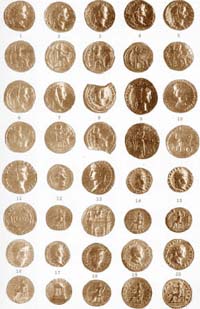 The next significant and properly documented discovery of Roman coins in Kerala was from Iyyal , very near Palayoor in the Trichur District, the location of one of the seven Malabar or west coast churches the founding of which is traditionally and in the Rambhan song attributed to St. Thomas. In an earthern jar discovered by Tharayil Karuppan Krishnan there were 34 punch-marked coins, 12 Roman gold coins, and 71 Roman silver coins. The entire hoard was acquired by the Arch. Dept. of the erstwhile Cochin State, and were at the Trichur Arch. Museum and have recently been tranferred to the Numismatic Study Centre, Nedumangadu. The hoard covers a period between 123 B.C. and 117 A.D. The denarii are from the periods of the Republic, Octavian ; Agustus BC 27 – AD 14, Tiberius AD 14 – 37, Claudius 41 – 54, and Nero 54 – 68. The aureii belong to the issue of Tiberius, Claudius, Nero, and Trajan. ((Classified and pubd., P.L.Gupta, 1965, Early Coins of Kerala, Dept. of Arch.,Trivandmum. ))
Touching these coins one has the exhilarating feeling that some of these might have been in the pouch or Madisheela or purse of Thomas on his way to or from Palayoor. ((Photos: in Gupta (op.cit.); Menachery, Kodungalloor City of St. Thomas, Kodungalloor, 1987, p.47; and in SATHYAMURTHY, Catalogue of Roman Gold Coins, Dept. of Arch., Kerala, Trivandrum, 1992. Description also in Menachery, Pallikkalakalum Mattum, (Malayalam), Trichur, 1984 repr. from the Express July 1978.))
During the last decade, in September 1983, when workers were digging in the compound of Smt. Madhavi Amma, wife of Pazhuparambil Vasu of Valuvally near N. Parur a few miles from Kodungallur (both Parur and Kodungalloor are sites of churches founded by the apostle), a pot containing reportedly two thousand coins was discovered. Before Madhavi Amma came to know of it many coins had found their way to the various toddy and arrack shops of the area. When this writer visited the spot in one or two days’ time many more coins had disappeared.
 By the time Police investigations were thoroughly and systematically completed many more coins had vanished. Finally the Arch. dept. could acquire from the District Collector an even smaller number, a paltry 252 coins. These are now at the Numismatic Study Centre, Nedumangadu. Most of the coins are mint-fresh and include coins from Nero to Antonius Pius with representations from the issues of all emperors in between. All these coins have been published now (1992) by the Arch. Dept., by Dr. Satyamoorthy, with detailed classifications and photographs of the O. & R. sides. ((Coin details Source- Prof. Menachery Articles))
The recent ongoing excavations at Muziris (Kodungallur) and Nelcyndis/ Nelkanda (near Kollam) are bringing up evidences of flourishing ports with links to the Graceo Roman world.
The Periplus has this remark, “There are imported here (the Malabar Ports), in the first place a great quantity of coin, ..”
The Roman could, it is believed make a profit on the sale of gold coins in India, perhaps because these were not only used as currency but also for ornament as is evidenced by the fact that many gold coins found in Kerala have been pierced through.
Exports from Muziris included, according to various authors, Pearl in considerable quantity and of superior quality; Pepper in large quantities; Gems in every variety, Diamonds, Amethyst or ruby and a variety of other commodities.
The flourishing trade with the Romans had a substantial impact on the economy of Malbar and the royal treasury and the export traders accumulated large sums of Roman currency. Pliny writes that India, China and Arabia between them absorbed one hundred million sesterces per annum from Rome. This sum is calculated by Mommsen to represent 1,100,000 pounds, of which nearly half went to India, the preponderance to South India.
Coins hoarded by the early Roman emperors from Augustus to Nero have been found in many regions in the vicinity of the South .At fifty-five different locations, mostly in Malabar in modern Kerala, Coimbatore and Madurai districts, these coins have been unearthed; the number of gold coins discovered has been described as a quantity amounting to five coolly loads.
The quantity of silver coins has been variously described as “a great many in a pot”, “about 500 in an earthen pot”, “a find of 163 coins”, “some thousands enough to fill five or six Madras measures”.
Sangam literature remarks “ The beautifully built ship of Yavanas came with Gold and returned with Pepper and Muziris resounded with noise”
Coins of all the Roman emperors from Augustus (27 BCE) to Alexander Severus (235 CE) have been discovered, covering a period of nearly three centuries. By far the greatest number of these Roman coins belong to the reigns of Augustus and Tiberius. After 235 CE, for the next one hundred years, there are no coins that can be dated, suggesting a temporary abeyance of trade between Rome and South India.
This could have been due to internal revolts and external attacks suffered by the Roman empire during that period. When order and good government were restored in Rome, trade with South India revived, as indicated by the finding of an increased number of coins from this period.
The large number of Roman coins found in Kerala are perhaps the saving of Pepper merchants. The trade was in the hands of experienced Nasrani traders.
3. Caliphate coins
Gold and silver coins of early caliphate dynasties notebaly Omayyed and Abbasid were also found in Malabar. Their date range from 7th to 9th century. These coins are again testimony of the Maritime trade with Malabar.
4.Venetian gold coins
Chaldeans and Assyrians were engaged in many trade routes and posts all over Central Asia and in the Indian subcontinent that led to the establishment to further colonies in cities along the Silk Road and in the Malabar Coast in earlier century.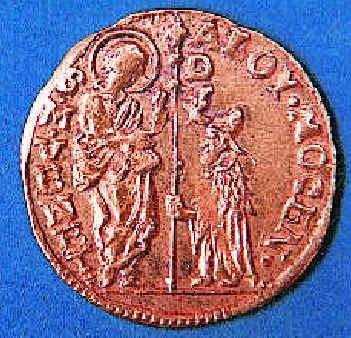
Western travelers like Cosmas, the Alexandrian monk of the sixth century, and Marco Polo, the Venetian traveler of the thirteenth century, made references to the church in India in their travelogues.
Marco Polo, the Venetian traveller who undertook a journey from Venice to China and back, recording his observations of the lands and people he visited, is one of the pioneers who set out to explore uncharted lands.
Marco Polo’s. Nicolò dei Conti voyaged widely in the Indian Ocean between 1414 and 1439. His itinerary is remarkable: Baghdad–Hormuz–Qalhat–Cambay– Malabar–Madras–Malapur–Sumatra– Burma–Ava–Pegu–Java–Borneo– Champa–Quilon–Cochin–Calicut– Cambay again–Aden–Berbera–Jiddah– Makkah–Cairo–Venice.
In India, Marco Polo visited several places on the East coast including the tomb of Saint Thomas near Madras. On the West coast, the first stop was naturally Calicut on the Malabar coast, now Kerala, then along the coast to Thane near Bombay, to Gujarat, and to Khambhat. He describes Sindh but does not seem to have stopped there. He also describes several inland provinces of South India.
From the 14th to the 18th century, there was trade between Venice and the ports of western and southern India. Traders brought Venetian gold coins known as ducats and sequins to India.
Besides the coins minted by various Indian rulers, many foreign coins too were used in certain parts of India during different periods of history. Merchants and traders brought these foreign coins to India.
During the early centuries of the Christian era, thousands of Roman gold and silver coins reached South India. It is believed that these coins were used as money or currency in places such as Muziris in Kerala and Madurai in Tamil Nadu. During the medieval period (fourteenth to eighteenth centuries), Venice in Italy traded with the ports of Western and Southern India.
Marco Polo was the most famous Venetian traveller who visited India. The Venetian traders brought Venetian gold coins to India and these were issued by Venetian rulers — Francis Lorendano, Paul Rainier and Peter Grimani. The Venetian gold coins were known as ducats and sequins. They weigh around 3.5 grams. 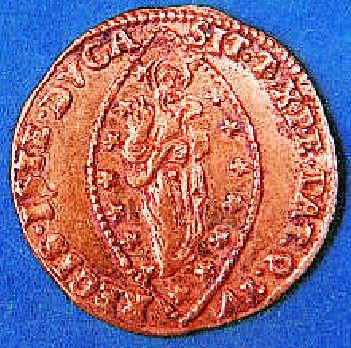 The obverse of these coins feature the figures of St. Mark and the Doge or the chief magistrate or ruler. The reverse features Jesus Christ standing within an oval of stars. The Venetian coins were in great demand in medieval Kerala. The Indian rulers purchased these coins as gifts for priests and scholars.
As these coins bore the figure of St. Mark, they were regarded as sacred objects by the Syrian Christians of Kerala. Many Syrian Christian ladies wore necklaces made of Venetian coins. Some Indians called the Venetian coins sanar kasu because the figures of Doge standing in front of St. Mark’s cross on these coins appeared like a toddy drawer (sanar) preparing to climb up the Palmyra tree. The arches on the reverse of these coins resembled a bow or villu and called villu kasu.
The Indians even produced imitations of these Venetian coins. One such imitation coin bears the figures of the Hindu deities Rama and Sita on the obverse and Lakshmana on the reverse
Are these coins brought by Marco Polo or other venetian traders?
Are these available for public display in any museums
Thanks for the pictures and this piece of history.
These coins are not really rare on account of the wide spread of the Venetian trade network.
They can be found in Museums and even with coin collectors all over. I have seen many with coin collectors in India too.
Needless to say a search for ‘Venice + ducats’ on eBay will yield many dealers.
However a word of caution here. Beware of fakes. Buy from a dealer with a good record only.
I have a piece of this coin.I am from Macedonia,can anybody guide me,can someone tell me what is the numizmatic price of this coin?
And is this the coin of imerator Cornelius,or what is the name of this coin.
I will send pics some time.
It was for the first time that the coins of the Adi Chera period was excavated from Kerala. Till now, the historical connection of the State (especially Muziris), with the Adi Chera empire was limited to the references in Greek and Tamil literature and inscriptions.
Historians and archaeological studies have confirmed that there were two headquarters of the Adi Chera Kings, Karur and Muziris.
http://www.hindu.com/2004/04/30/stories/2004043014340300.htm
How to get the photo of the coin ?
Hinduism and Budhism may have played a role in shaping some part of Christian thought as is evident
from the legend of “Barlaam and Ioasaph”.These figures even have feast days in the Orthodox as well as Catholic churches.Ioasaph is actually a corruption of the name Bodhisattva and probably Kashmir
which earlier had a sizeable Budhist population had a role in the propagation of the legend into Christian lands.Amazingly Kashmir has a tomb of Yuz Asaf which everyone says is Jesus’s tomb.The similarity in the names Ioasaph and Yuz Asaf leaves me wondering!!!!!
CHANAR KASU OR VILLU KASU OF THE CHERA EMPIRE
After the fall of Chera Empire (1102 AD) and the Pandyan Empire(1310) the minting of SANAR KASU or VILLU KASU might have stopped.
However the Sanar Kasu or Villu Kasu was still in usage even after the fall of Villavar Kingdoms in the fourteenth century. Since the original Chanar Kasu or Villukasu was not available a foreign gold coin from Venis was substituted for the Chanar Kasu. Still the foreign Italian gold coin was called CHANAR KASU.
During the Portuguese Era the Venetian Gold Ducats or Sequins were used as a substitute for the Sanar Kasu.
http://www.hindu.com/thehindu/yw/2002/03/16/stories/2002031600100200.htm
http://www.indianetzone.com/22/venetian_coins_south_india.htm
The Venetian sequins displayed St.Mark standing before the Doge, the Venetian Prince and inbetween them was a Cross on the obverse side. On the reverse side of the coin two bow like curved marks were there. British scholors tried to explain why people called it Sanar Kasu because people simply mistook the Doge standing before the cross as a Shanar standing before a Palm tree.
Edgar Thurston like all the other European reasearchers usually writes about Nadars in a disparaging way. European researcers though lacked knowledge in Dravidian language and culture they were effectively assisted by Madras Brahmins. Edgar Thurston and his assistant Kandur Rangachari mentions about the Shanar Coin and maintains that it was only a Venetian Sequin mistaken for a Sanar Kasu.
http://books.google.co.in/books?id=Erin3nkU3ZUC&pg=PA367&lpg=PA367&dq=castes+and+tribes++thurston+shanar+coin&source=bl&ots=1L_-BsqgjC&sig=UFOgoo60JcoF9fofcErOlkD5ahY&hl=en&sa=X&ei=PIGFUYb1PMnorAeZhIHwBw&ved=0CD4Q6AEwAw#v=onepage&q=%20shanar%20coin&f=false
In the Portuguese Goa Sanar-Kasu was used after 1500s. Perhaps the Goans mistook the Venetian Secchino as a Sanar Kasu too. Though Christians Goans perhaps mistook the cross for a Palm Tree and the Doge standing opposite to St Mark, a Shanar. Hence the Goans called it Shanar Kasu too.
http://www.ebooksread.com/authors-eng/albert-romer-frey/a-dictionary-of-numismatic-names–their-official-and-popular-designations-hci/page-33-a-dictionary-of-numismatic-names–their-official-and-popular-designations-hci.shtml
Other explanation is that the Gold Sanar Kasu otherwise called Villu Kasu had been in usage for many thousand years during the Chera Period and had been a major currency in India and people found a substitute for it in the Venetian Sequins.
In the 19th century when British administration was set up in Thirunelveli a group of Nadars met the Tinnevely collector claiming Royal descent as vanquished Kshatriyas. They claimed that they were the fallen Dravidian Kshatriyas who descended from the Pandyan Cheran and Cholan ie the Tamil Tripartite Kingdoms. Shanar claimed that their ancestors had issued Gold coins called Sanan Kasu. When the Nadar were asked to produce a gold coin they brought a wrong coin ie a Venetian Drachm.
Nobody has actually seen a Gold Villu Kasu or Sanan Kasu from the Chera Pandyan period. But many Chera Copper Coins with Palm tree and Bow and Arrow emblem of the Villavar people does exist.
i have a some coins can any one guide me from which time period they belong or their name plz
[email protected]